

Pork is one of those foods that can make Alpha-gal syndrome more complicated than people expect.
A pork chop is obvious. So is a package of bacon.
But what about green beans cooked with a little bacon grease? A bowl of baked beans? Breakfast sausage? Ham-flavored soup? A chicken sausage made with a pork casing?
That’s where I think pork becomes one of the trickier mammalian foods to deal with.
Pork contains alpha-gal, and people diagnosed with Alpha-gal syndrome are generally advised to avoid eating it.That includes bacon, ham, pork sausage, and other foods made from pigs.
But pork also shows up as an ingredient in foods that don’t look like pork at all.
And that’s the part I want to focus on here.
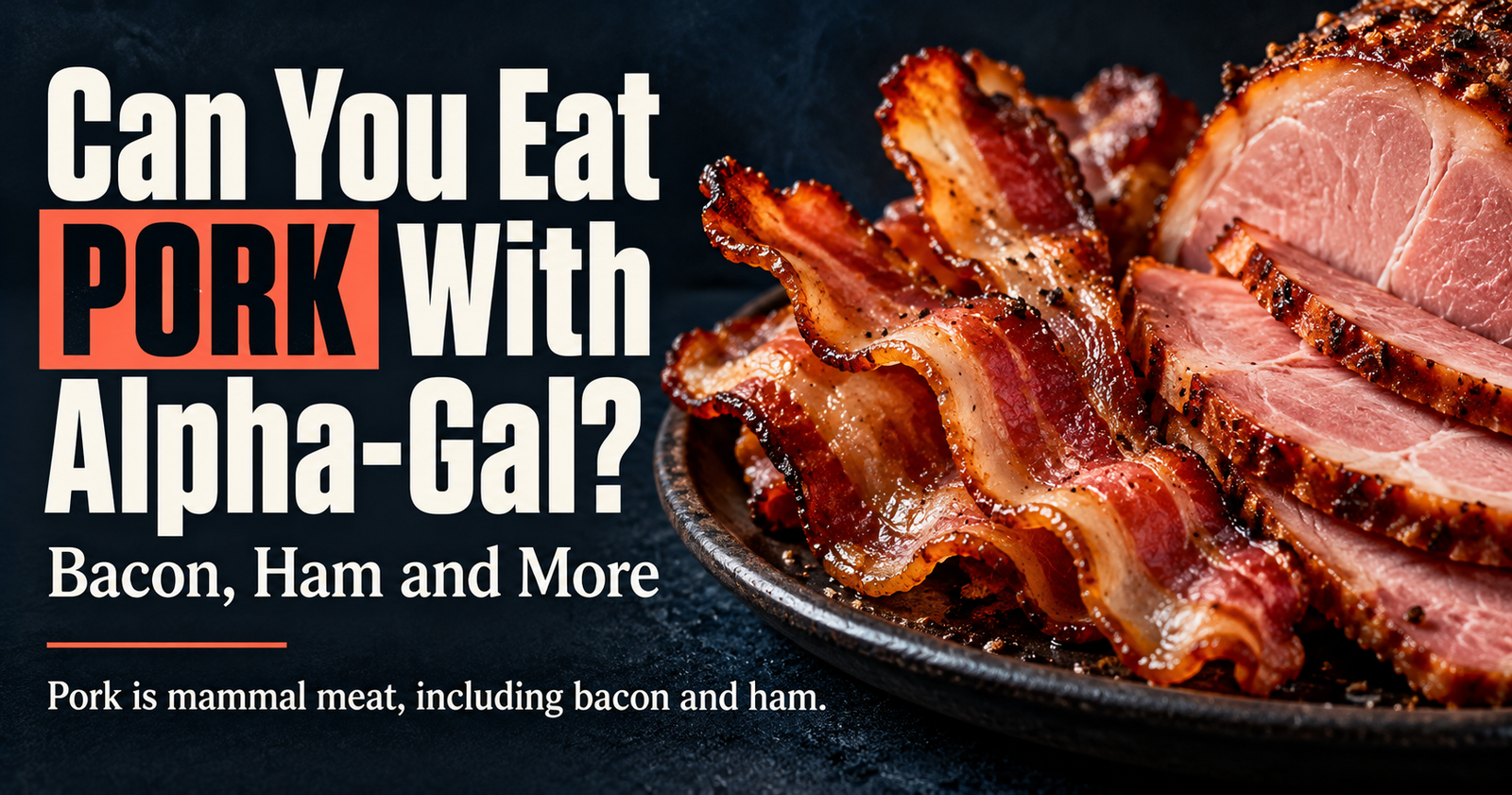
Why Pork Is a Problem With Alpha-Gal Syndrome
Pigs are mammals.
That’s the important detail.

Alpha-gal is a sugar molecule found naturally in most non-primate mammals, including pigs, cattle, sheep, and deer. Understanding how Alpha-gal sensitization begins can clarify why a tick bite may later affect reactions to mammalian foods.
When someone develops Alpha-gal syndrome, their immune system can react to alpha-gal after exposure.
That’s why pork belongs in the same general category as beef, lamb, and venison.
It doesn’t matter whether the pork is smoked, cured, baked, grilled, fried, or slow-cooked.
Cooking pork differently doesn’t reliably remove the alpha-gal concern.
The CDC recommends that people diagnosed with AGS generally stop eating mammalian meat, including pork.
Individual reactions can vary, but I wouldn’t use that variation as a reason to experiment with pork at home.
Pork Is Still Mammalian Meat Even When It’s Called White Meat
This is something I think deserves explaining because pork marketing has confused people for years.
You may remember pork being advertised as “the other white meat.”
That description has nothing to do with Alpha-gal.
A pig doesn’t become a bird because its meat looks lighter than beef.
Pork is mammalian meat.
Chicken is poultry.
Those are completely different animal categories.
That’s why I don’t make Alpha-gal decisions based on whether meat looks red or white.
I look at the animal it came from.
If you want the broader explanation, our article about why Alpha-gal isn’t simply a red meat allergy explains why the term can be misleading.
Bacon Is Pork, Even When There’s Only a Little Bit
Bacon is probably one of the most frustrating pork products because it shows up everywhere.
Breakfast sandwiches.
Burgers.
Salads.
Baked potatoes.
Green beans.
Beans.
Soups.
Casseroles.
Restaurant side dishes.
Sometimes bacon is the main ingredient.
Other times it’s there simply to add flavor.
A few bacon pieces still count as pork
I wouldn’t assume a small amount of bacon is automatically harmless.
If bacon is something my Alpha-gal management plan requires me to avoid, that includes bacon used as a topping or seasoning.
A salad doesn’t become pork-free simply because most of the bowl contains lettuce.
A baked potato doesn’t become pork-free because the bacon pieces are small.
The amount may influence an individual’s reaction, but there isn’t a universally safe amount of bacon for people with AGS.
Picking bacon off afterward isn’t my solution
If a dish has already been prepared with bacon, removing the visible pieces doesn’t necessarily remove everything introduced during cooking.
Bacon fat and drippings may remain.
That’s why I prefer asking how something was prepared before it reaches the table.
It’s easier than trying to fix the meal afterward.
Bacon Grease Is Where Pork Gets Sneaky
This is one of the biggest things I pay attention to when thinking about everyday home cooking.
A lot of traditional recipes use bacon grease.
And sometimes the person cooking doesn’t even think of it as adding pork.
They’re just adding flavor.
Green beans are a perfect example
Fresh green beans don’t naturally contain alpha-gal.
Neither do canned green beans.
But green beans cooked with bacon grease are a different dish from green beans prepared with olive oil.
The vegetables themselves haven’t changed.
The cooking fat has.
The same problem comes up with potatoes
Potatoes are another naturally non-mammalian food.
But fried potatoes cooked in bacon grease introduce a pork-derived ingredient.
Hash browns may be cooked in various fats depending on the restaurant or recipe.
That’s why I ask what something is cooked in rather than assuming the main ingredient tells me everything.
Bacon grease can be reused
In some home kitchens, bacon grease is saved in a container and used for other meals.
That’s a perfectly familiar cooking practice.

But it also means a person preparing food may use pork fat without thinking to mention bacon as an ingredient. Readers sorting through hidden mammal ingredients can start with what Alpha-gal syndrome actually is.
If I’m eating at someone else’s house, that’s a detail worth explaining.
“Please don’t use bacon grease or lard when preparing my portion.”
That’s clearer than simply saying I don’t eat pork chops.
Can You Eat Ham With Alpha-Gal Syndrome?
Ham is pork.
That includes common products such as:
- Sliced deli ham
- Smoked ham
- Honey-glazed ham
- Country ham
- Ham steaks
- Ham hocks
- Ham used in soups and beans
The curing or smoking process doesn’t turn ham into a non-mammalian food.
And a sweet glaze doesn’t change where the meat came from.
Holiday meals are where ham becomes hard to avoid
Think about a traditional holiday dinner.
Someone makes a big ham.
Then the ham drippings get used in another dish.
A ham bone goes into a pot of beans.
Ham pieces get added to potatoes or casseroles.
Suddenly, pork isn’t limited to the platter sitting in the middle of the table.
That’s why I think it’s useful to ask about the recipe rather than only looking for visible meat.
Ham Hocks Can Make an Otherwise Simple Meal a Problem
Ham hocks are commonly used to flavor foods.
Beans are a big example.
So are greens, soups, and certain slow-cooked dishes.
The finished meal may contain very little visible pork.
But it may have been cooked for hours with a ham hock.
That’s something I’d want to know.
What I ask about beans
Instead of asking whether the beans contain meat, I ask:
“Were these beans cooked with ham, bacon, pork fat, or a ham hock?”
That’s a much better question.
Someone might honestly say there aren’t any pieces of meat in the beans.
But the cooking liquid may have been flavored with pork.
Specific questions help prevent that misunderstanding.
Pork Sausage Deserves More Attention Than the Name Suggests
Sausage is another food where the exact ingredients matter.
Traditional breakfast sausage is often made from pork.
But not every sausage is.
You can also find chicken sausage, turkey sausage, and other varieties.
That’s useful when looking for alternatives.
However, I still read the entire ingredient list.
The casing can matter
Some sausages use natural casings made from animal intestines.
Pork casings are one example.
That means a sausage made primarily from chicken or turkey could potentially have a mammalian casing.
Not every poultry sausage does.
Some use other casings or are sold without casings.
That’s why I don’t assume every product labeled chicken sausage contains pork.
I check.
What I look for on sausage packaging
I start with the meat.
Then I look at the casing.
Then the fat and other added ingredients.
If the package clearly says pork casing, that answers an important question.
If the casing source isn’t identified and it’s relevant to my avoidance plan, I contact the manufacturer.
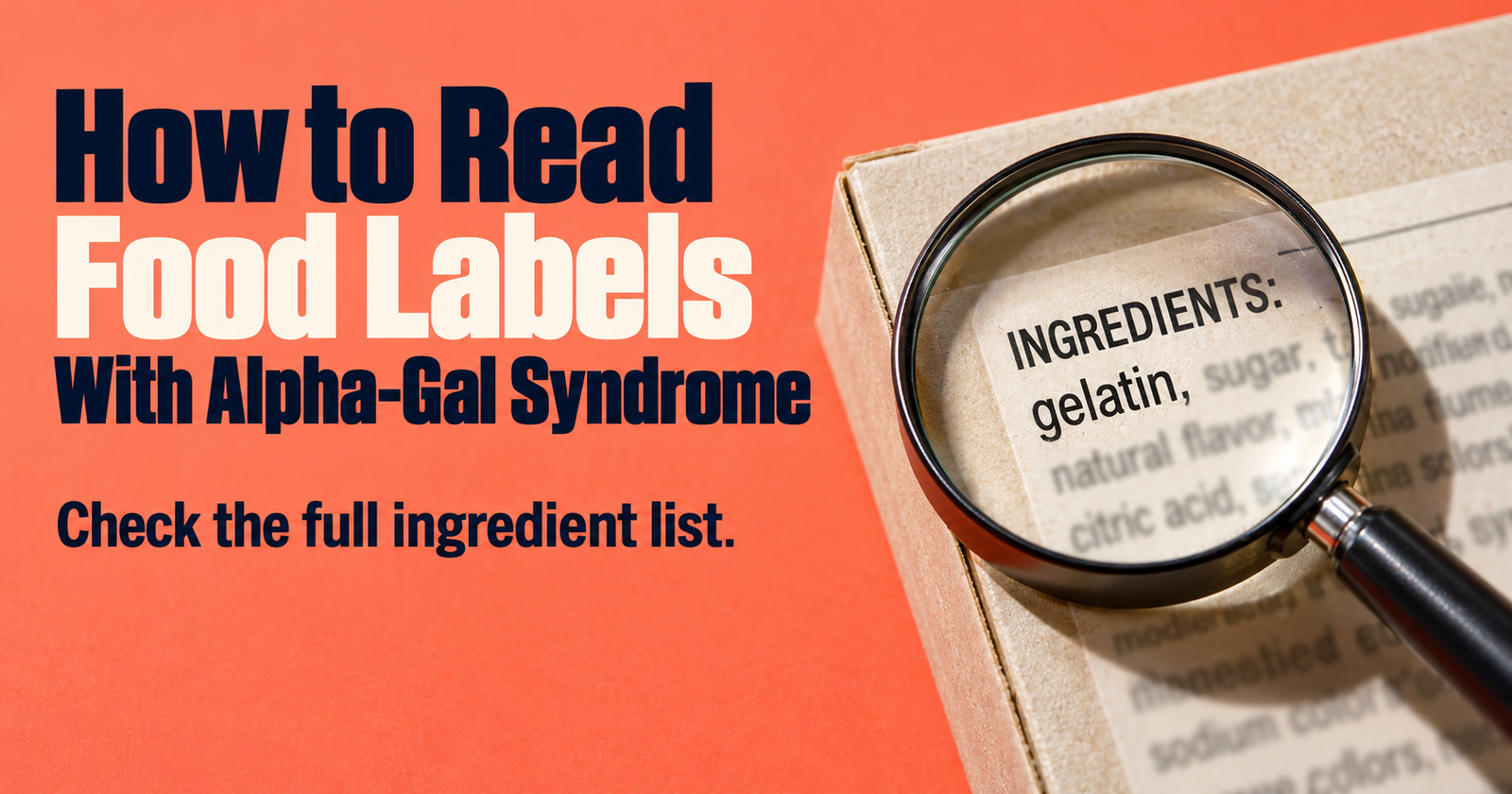
It’s the same practical approach I use when reading food labels with Alpha-gal syndrome.
The front tells me what the company wants to advertise.
The ingredients tell me what I’m actually buying.
Turkey Bacon Isn’t Automatically the Same as Pork Bacon
Turkey bacon can be a useful alternative for people avoiding pork.
Turkey is poultry and doesn’t naturally contain alpha-gal.
But I still check the product.
Turkey bacon is manufactured food, and formulations vary.
I look for any additional mammalian ingredients rather than assuming every product is identical.
The same applies to chicken bacon and other poultry-based alternatives.
I also pay attention to the cooking pan
Even when the product itself contains no mammalian ingredients, the preparation can introduce something else.
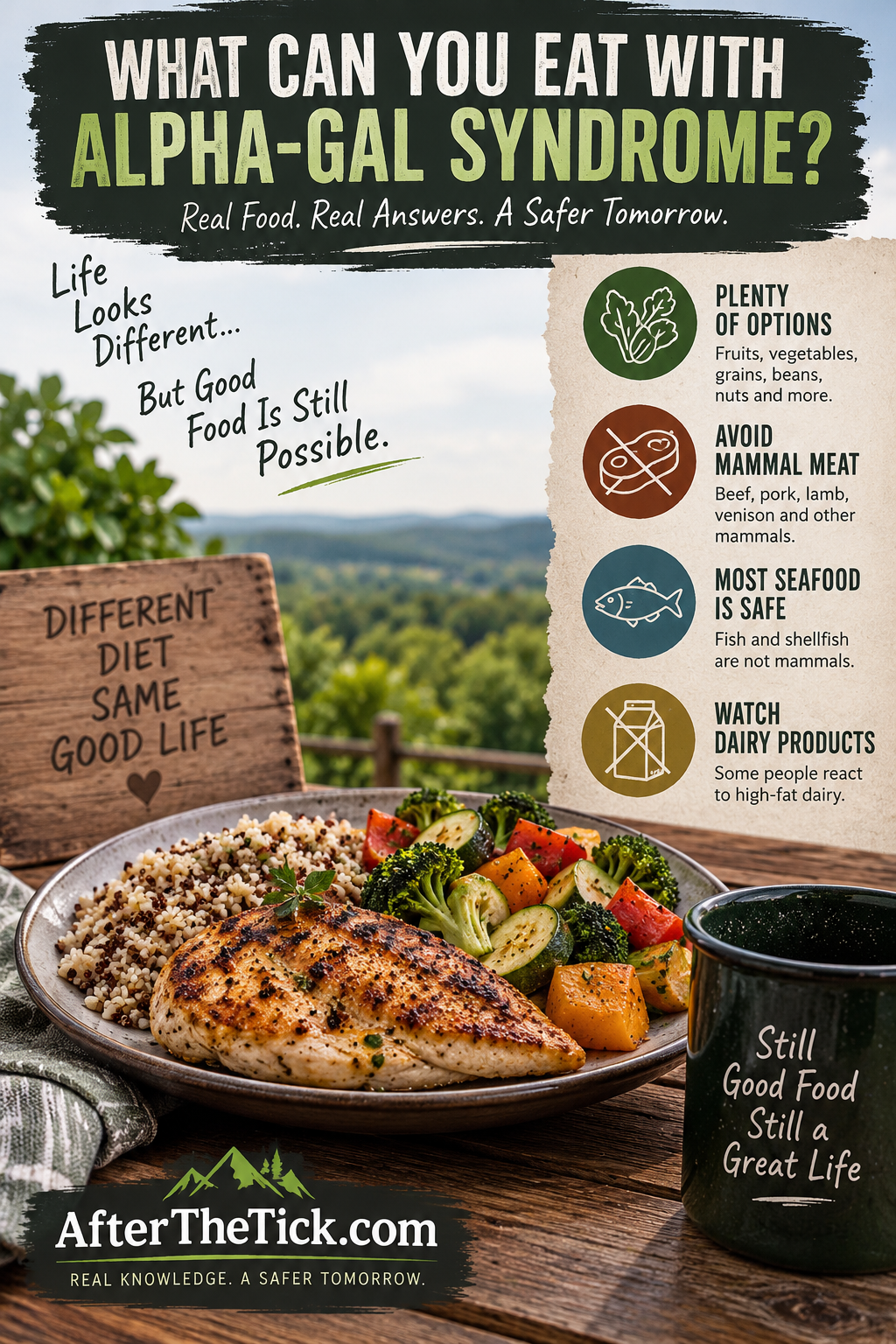
If turkey bacon is cooked in leftover pork bacon grease, that’s a different situation from cooking it in a suitable plant oil. Practical cooking substitutions for Alpha-gal can help separate the main food from the ingredients added during preparation.
That distinction matters for anyone whose avoidance plan includes pork fat.


Can You Eat Pork Rinds With Alpha-Gal?
Pork rinds are made from pig skin.
So yes, they’re pork-derived.
The fact that they’re crunchy, packaged like chips, and sold in the snack aisle doesn’t change their source.
I think this is an important example because people sometimes mentally separate snack foods from meat.
But Alpha-gal doesn’t care which grocery aisle a product came from.
Pork skin is mammalian tissue.
That’s why I wouldn’t treat pork rinds as an appropriate substitute for potato chips for someone avoiding mammalian meat products.
What About Lard?
Lard is rendered pig fat.
It can appear in cooking, baking, frying, and certain packaged foods.
This is one of the ingredients I pay attention to because it isn’t always associated with an obvious pork dish.
Where lard can show up
Lard may be used in certain:
- Pie crusts
- Biscuits
- Tortillas
- Refried beans
- Fried foods
- Traditional baked goods
That doesn’t mean every tortilla or pie crust contains lard.
Many don’t.
It means I check the recipe or package.
A flour tortilla made with vegetable oil is different from one made with lard.
A pie crust made with shortening is different from one made with pork fat.
And when I’m shopping, I don’t assume one brand represents every product in the category.
Why Refried Beans Are Worth Checking
Refried beans are one of those foods that can look completely harmless from an Alpha-gal standpoint.
Beans are plants.
But traditional recipes may use lard.
Other recipes use vegetable oil.
Some packaged versions are specifically made without lard.
The restaurant question I ask
“Are your refried beans made with lard or another pork product?”
That’s usually all I need to start the conversation.
I don’t need to give the server a medical lecture.
I need to know what fat the kitchen uses.
If they don’t know, I ask whether they can check.
If they can’t confirm the ingredients and my avoidance plan requires avoiding pork fat, I choose something else.
Pork Broth Can Be Easy to Miss
Pork broth isn’t as familiar to many shoppers as chicken or beef broth.
But it exists.
Pork stock, pork-based soup bases, and pork drippings can be used in soups, sauces, ramen, and other dishes.
This matters because a dish may contain no visible pork while still being prepared with pork broth.
Ramen is a good example
Some ramen styles use pork-based broth.
Tonkotsu ramen, for example, is traditionally made using pork bones.
The noodles themselves aren’t the issue.
The broth is.
Other ramen dishes use chicken, vegetable, seafood, or different broth combinations.
That’s why I wouldn’t assume every bowl of ramen contains pork.
I’d ask about the specific broth.
And I’d check the toppings and other ingredients too.
Can You Eat Pepperoni With Alpha-Gal Syndrome?
Pepperoni is one of those foods where I never assume I know the ingredients just from looking at it.
Traditional pepperoni is commonly made from pork and beef.
Both come from mammals.
So standard pepperoni is generally not something that fits a mammalian-meat avoidance plan for Alpha-gal syndrome.
But there’s another reason I check instead of assuming.
There are poultry-based pepperoni alternatives made from turkey or other non-mammalian meats.
That gives me options when I want pizza without traditional pepperoni.
Pizza is more than the pepperoni
Once I’m looking at pizza, though, I have several separate questions.
What’s on top?
Does dairy matter for me?
Is there mammalian meat in the sauce or toppings?
Is the crust made with any ingredients I personally avoid?
I’m not trying to make pizza complicated.
I’m breaking it apart so I can solve each piece.
That’s the same approach I use with almost every meal now.
Deli Meat Is Another Place Where I Read the Exact Product
The deli counter can be confusing because everything is sitting beside everything else.
Ham is obviously pork.
Roast beef is mammalian meat.
Turkey and chicken are poultry.
But processed deli products may contain additional ingredients beyond the meat itself.
That’s why I don’t simply ask:
“Is this turkey?”
I want the ingredient information for that specific product.
Turkey isn’t pork, but turkey deli meat is still a manufactured food
Plain turkey itself doesn’t naturally contain alpha-gal.
But deli turkey can contain seasonings, flavorings, broths, binders, or other added ingredients depending on the product.
I check the label or manufacturer information.
Once I find a deli turkey that fits my needs, I save the exact brand and variety.
That makes future shopping much easier.
Hot Dogs Need More Than a Quick Glance
Hot dogs are another food I don’t judge by appearance.
Traditional hot dogs can contain beef, pork, or combinations of meats.
That makes the ingredient list especially important.
A package may clearly say:
100% Beef
For someone with AGS avoiding mammalian meat, that’s obviously not a solution.
Another may contain pork.
Then there are turkey and chicken hot dogs.
Those can give me non-mammalian alternatives, but I still check the complete ingredients and casing.
I don’t assume “turkey dog” answers every question
I check:
What meat is actually used?
What casing is used?
Are mammalian fats added?
Are there other ingredients relevant to my individual restrictions?
This sounds like a lot when it’s written out.
In the store, it takes me seconds once I know what I’m looking for.
Breakfast Is Where Pork Shows Up Everywhere
Breakfast menus can be surprisingly pork-heavy.
Bacon.
Sausage.
Ham.
Biscuits and sausage gravy.
Breakfast sandwiches.
Breakfast burritos.
Omelets with ham.
Even foods that aren’t pork can be cooked near or with pork products.
That’s why breakfast is one of those meals where I like knowing my alternatives before I’m hungry.
Eggs themselves aren’t the pork problem
Eggs come from birds.
They don’t naturally contain alpha-gal.
The question is what gets added to them.
An omelet with ham is different from a plain omelet.
Eggs cooked in bacon grease are different from eggs cooked in an appropriate plant oil.
A breakfast sandwich with sausage is different from eggs on toast.
Once I separate the meal into ingredients, breakfast becomes much easier to navigate.
Sausage Gravy Is One I’d Ask About Every Time
Traditional sausage gravy commonly contains pork sausage.
It can also contain milk, which may or may not matter depending on an individual’s dairy tolerance.
So biscuits and gravy can potentially involve more than one mammalian ingredient.
If I’m eating somewhere unfamiliar, I don’t assume “country gravy” or “white gravy” tells me everything.
I ask whether it contains sausage, meat drippings, or another mammalian ingredient.
Pork Can Show Up in Restaurant Vegetables
This is probably one of the easiest things for somebody without Alpha-gal to overlook.
You order vegetables because you’re trying to keep the meal simple.
Then you discover the green beans contain bacon.
The greens were cooked with ham hock.
The beans use pork fat.
The potatoes have bacon mixed in.
Nobody was trying to hide anything.
Those are normal cooking methods in a lot of kitchens.
That’s why I ask about preparation.
My question is simple
“Are any of the vegetables cooked with bacon, ham, lard, or another pork product?”
That gets me much farther than:
“Are the vegetables safe?”
The kitchen understands ingredients.
They may not understand Alpha-gal.
Mexican Food Is Where I Check the Cooking Fat
Mexican food can give me plenty of options, but I pay attention to lard and meat broths.
Refried beans may contain lard.
Rice may be prepared with broth.
Certain meats obviously need consideration.
Cheese and sour cream depend on my individual dairy tolerance.
But there are also plenty of foods built around chicken, beans, rice, vegetables, salsa, corn, avocado, and other ingredients that can potentially fit.
I don’t write off the entire cuisine.
I ask how the specific food is prepared.
Pizza Doesn’t Have to Disappear Either
Traditional pepperoni and sausage create obvious issues because they’re commonly mammalian meats.
But pizza itself is just a collection of ingredients.
Crust.
Sauce.
Cheese.
Toppings.
If dairy is something I tolerate, cheese may still work for me.
If it isn’t, I can look at alternatives.
Chicken and vegetables can replace mammalian meat toppings.
Some people prefer completely dairy-free pizza.
The right version depends on the person.
Again, I don’t need an “Alpha-gal pizza.”
I need a pizza made from ingredients that fit my Alpha-gal plan.
What About Pork Flavoring?
This is where label reading becomes important.
A packaged food may use pork-derived flavoring, pork broth, or another pork ingredient without containing an obvious chunk of pork.
I check the ingredient list.
If something specifically identifies pork, that’s straightforward.
If a vague flavoring concerns me because of my reaction history or medical guidance, I investigate that particular product rather than assuming every flavoring is pork-derived.
That distinction keeps me from unnecessarily eliminating huge categories of food.
Gelatin Can Come From Pigs Too
Pork doesn’t only show up as meat or fat.
Porcine gelatin is made from pigs.
That means gummy candies, marshmallows, capsules, desserts, or other gelatin-containing products can potentially involve a pork-derived ingredient.
Not everyone with AGS reacts to mammalian gelatin, so this is another area where individual sensitivity matters.
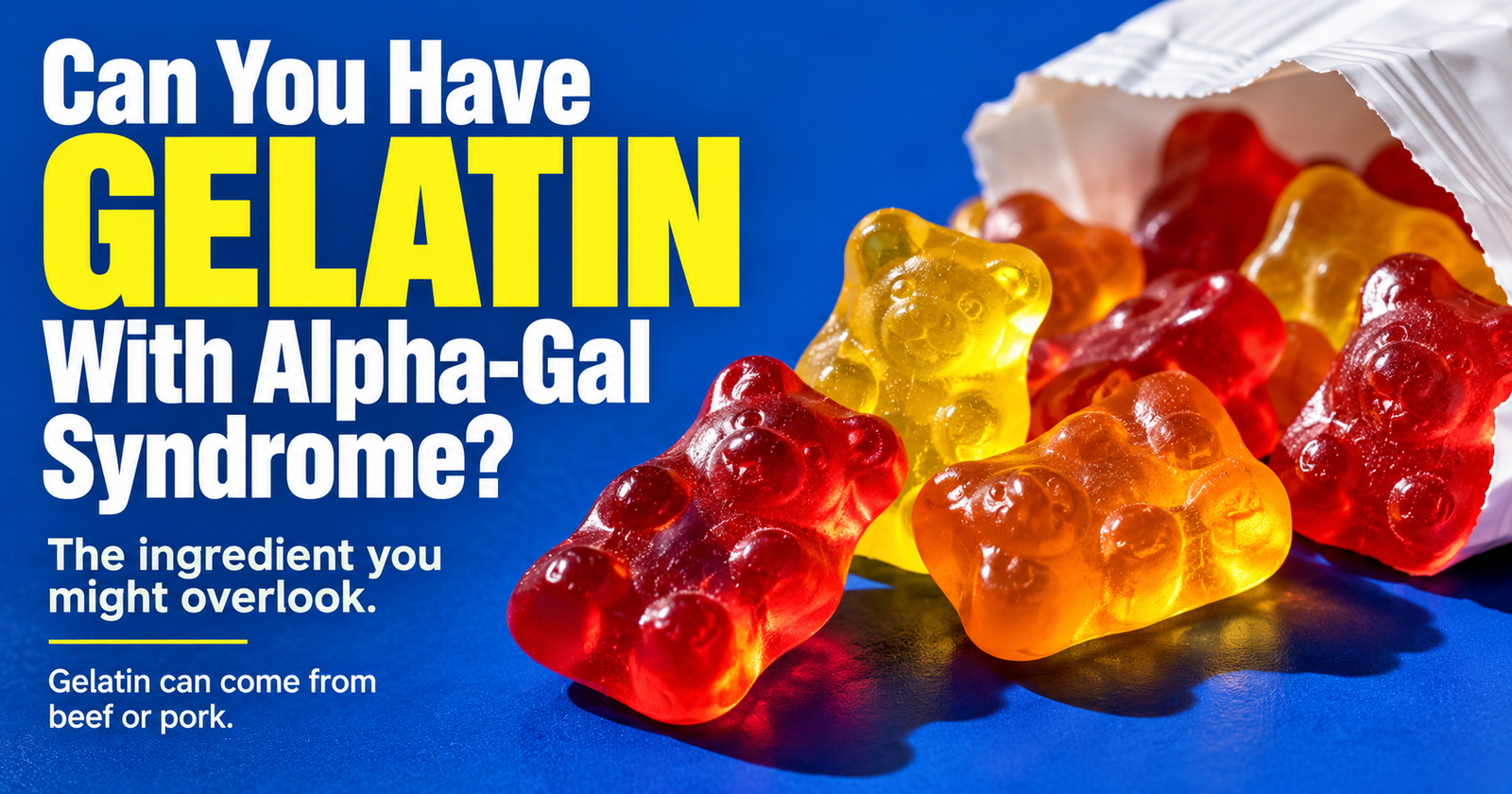
We’ve covered that separately in our gelatin and Alpha-gal guide because the ingredient shows up in enough unexpected places to deserve its own discussion.
The practical lesson is simple:
Pork-derived doesn’t always look like pork.
I Don’t Treat Every Ingredient That Might Come From a Pig as Definitely Dangerous
This is where I think Alpha-gal food advice can become unnecessarily frightening.
There are long lists online of ingredients that can potentially have animal-derived sources.
Some lists contain dozens or hundreds of items.
I don’t think the right response is automatically eliminating every food containing every ingredient on those lists.
There is a big difference between:
This is definitely pork.
and
This ingredient could theoretically be manufactured using an animal-derived source.
I want evidence.
I want to know what my allergist says matters for my individual sensitivity.
And if a particular ingredient needs investigation, I contact the manufacturer.
That’s far more useful than being afraid of every unfamiliar word.
How I Handle Family Meals With Pork
Pork is common enough that I don’t expect everybody around me to stop eating it.
If the family wants bacon, that doesn’t automatically mean bacon disappears from the house.
What matters is how food is prepared according to the precautions appropriate for my sensitivity.
Maybe I cook my portion separately.
Maybe I use different utensils.
Maybe I make the pork-containing topping optional.
Maybe I prepare the main meal without pork and let somebody add bacon to their own plate.
The exact precautions depend on the person.
Taco night is easy to split
One protein can be chicken.
Another can be beef or pork for family members who want it.
Then everybody uses the same tortillas, vegetables, salsa, and other appropriate toppings.
Baked potatoes work the same way
I don’t need bacon mixed into the entire dish.
Put toppings on the table.
Everybody builds their own.
Salads are another easy one
Bacon doesn’t need to be mixed through the whole bowl.
Keep it separate.
Little changes like that make family meals much easier than preparing completely different dinners.
Cookouts Take a Little Planning
Cookouts are another place where pork tends to appear.
Hot dogs.
Bratwurst.
Sausage.
Bacon burgers.
Pulled pork.
Pork steaks.
That’s a lot of mammalian food on one grill.
But cookouts also have chicken, turkey products, vegetables, corn, potatoes, salads, fruit, and other foods that can potentially work.
The part I’d figure out beforehand is preparation.
What needs to be cooked separately?
What level of grill cross-contact matters for my individual sensitivity?
Which sides contain bacon or dairy?
What products do I already know work for me?
I would much rather answer those questions before everyone is standing around the grill hungry.
Pulled Pork Is Still Pork No Matter How Long It Cooks
Slow cooking doesn’t make alpha-gal disappear.
Smoking doesn’t either.
Pulled pork, pork ribs, pork shoulder, and barbecue pork are still mammalian meats.
The same applies to the juices and drippings produced during cooking.
That’s why I’d pay attention to sauces or sides made using those drippings too.
A pot of beans sitting beside the smoker may have pork mixed into it even if the menu simply calls them barbecue beans.
Can Cooking Pork Longer Destroy Alpha-Gal?
I would not rely on cooking temperature to make pork appropriate for someone with AGS.
Cooking meat thoroughly is important for ordinary food safety.
That’s a separate issue.
Alpha-gal isn’t something I can reliably solve by ordering pork well-done.
The same principle applies to beef and other mammalian meats.
If pork is part of my Alpha-gal avoidance plan, cooking it longer isn’t my workaround.
I Don’t Test My Pork Tolerance at Home
This is another line I wouldn’t cross.
Maybe my blood-test number has fallen.
Maybe I haven’t reacted in a long time.
Maybe somebody else with AGS tells me they can eat pork again.
None of those things would convince me to sit down with bacon and run my own food challenge.
Alpha-gal reactions can be unpredictable.
If reintroducing mammalian meat ever becomes medically appropriate, that’s a conversation to have with an allergist.

We already know that Alpha-gal syndrome can change over time, but improvement isn’t the same as permission to test a previous trigger on my own.
The Alternatives Are Better Than They Used to Be
The good thing is that pork doesn’t have to leave a giant hole in every meal.
There are poultry-based alternatives for many familiar foods.
Turkey bacon.
Chicken sausage.
Turkey sausage.
Poultry hot dogs.
Chicken pepperoni and other specialty alternatives.
Not every substitute is appropriate automatically.
I still read the ingredients.
But having choices makes everyday meals easier.
I Don’t Need Every Substitute to Taste Exactly Like Pork
This is something I’ve come to appreciate about food restrictions generally.
If I spend every meal asking whether turkey bacon tastes exactly like pork bacon, I’m probably setting myself up for disappointment.
Sometimes the better solution isn’t finding a perfect imitation.
It’s finding food I genuinely like.
Maybe that’s seasoned potatoes instead of bacon beside breakfast.
Maybe it’s chicken sausage.
Maybe it’s avocado on a sandwich.
Maybe I stop trying to recreate one specific pork dish and make something completely different.
That’s how a restricted diet starts feeling like normal food instead of a collection of replacements.
The Pork Question Gets Easier Once I Think Beyond Pork Chops
At first, “avoid pork” sounds simple.
Then you realize pork can mean:
Bacon.
Ham.
Sausage.
Lard.
Ham hocks.
Pork broth.
Pork casings.
Pepperoni.
Pork rinds.
Gelatin in some products.
Bacon grease used to cook something else.
That’s why pork deserves its own Alpha-gal guide.
Not because I want a longer list of things to worry about.
Because once I know the common places pork shows up, I don’t have to worry about everything.
I know what questions to ask.
How I Think About Pork Now
I don’t spend grocery trips looking suspiciously at every ingredient.
I start with the obvious question:
Did this come from a pig?
If yes, and pork is part of my mammalian-meat avoidance plan, that’s straightforward.
If the source isn’t obvious, I read the food label.
If the label can’t answer a question that genuinely matters for my sensitivity, I contact the manufacturer or choose another product.
At restaurants, I ask what the food was cooked with.
At family meals, I explain that bacon grease and ham hocks count too.
And at home, I keep alternatives around that make dinner easy.
That’s a lot more manageable than walking around thinking:
“Pork could be anywhere.”
Yes, pork can show up in unexpected places.
But once I know where those places usually are, it stops being quite so unexpected.
Hannah Brooks writes about the everyday reality of managing food with Alpha-gal syndrome for After The Tick, including grocery shopping, family meals, ingredient labels, practical substitutions, and making everyday food feel normal again.