
If somebody told me tomorrow that I couldn’t eat beef, pork, venison, or any other mammalian meat, I know exactly where my mind would go.
What am I supposed to eat now?
Not in some complicated medical sense. I’m talking about standing in front of the refrigerator at 5:30, trying to figure out what to make for dinner.
What goes on a sandwich? What do I make for breakfast without bacon or sausage? Can I still eat spaghetti? What about pizza, tacos, or a good old-fashioned cookout?
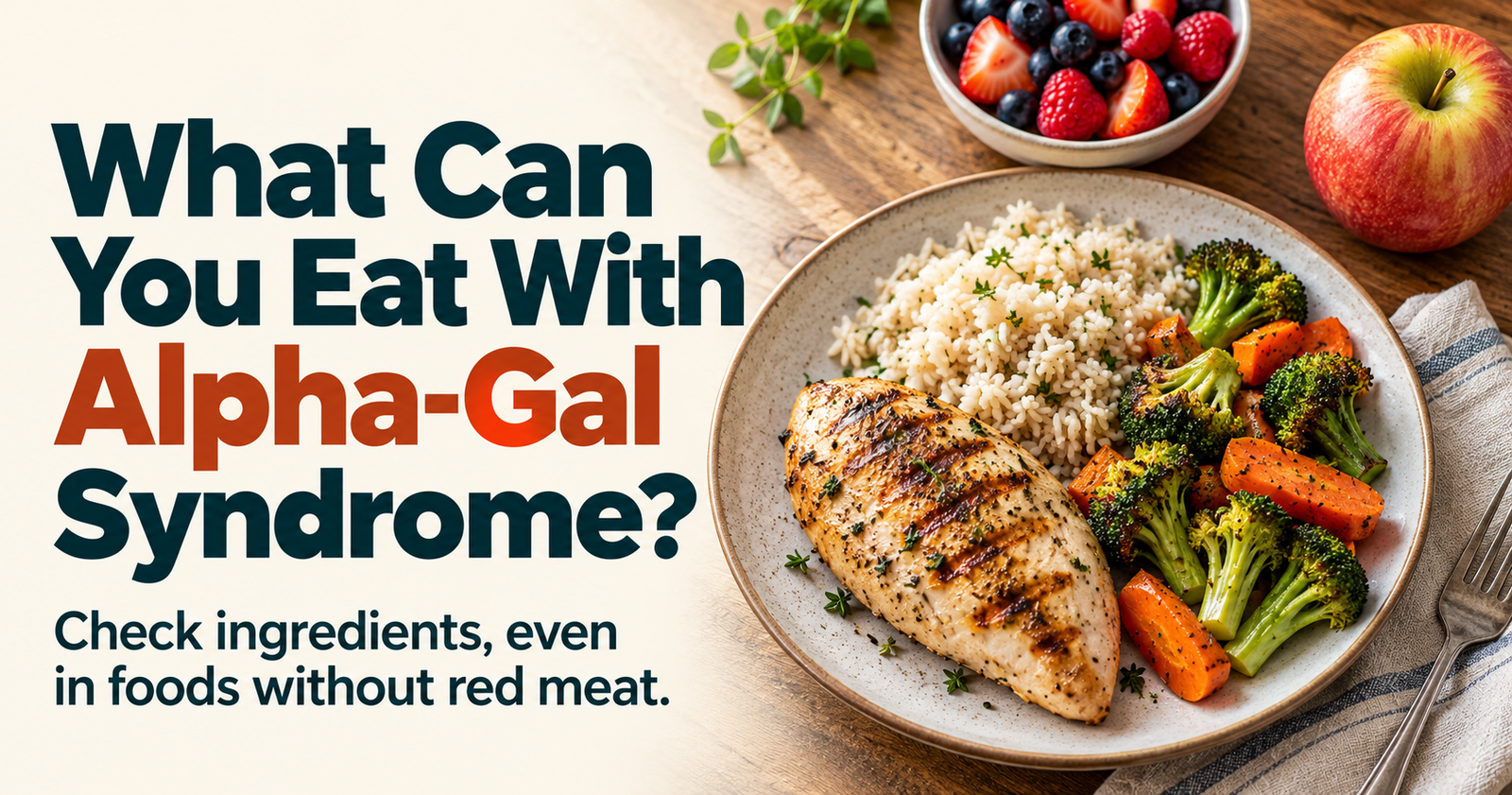
The good news is that there are still plenty of foods available to people living with Alpha-gal syndrome.
Chicken, turkey, fish, seafood, eggs, fruits, vegetables, rice, potatoes, beans, and many other everyday foods do not naturally contain alpha-gal. The guide to chicken with Alpha-gal explains why the ingredients added during cooking still deserve careful attention.
The harder part is figuring out what has been added to those foods.
And that’s where I’d start making some changes.
What Foods Can You Eat With Alpha-Gal Syndrome?
Let’s get the biggest question answered first.
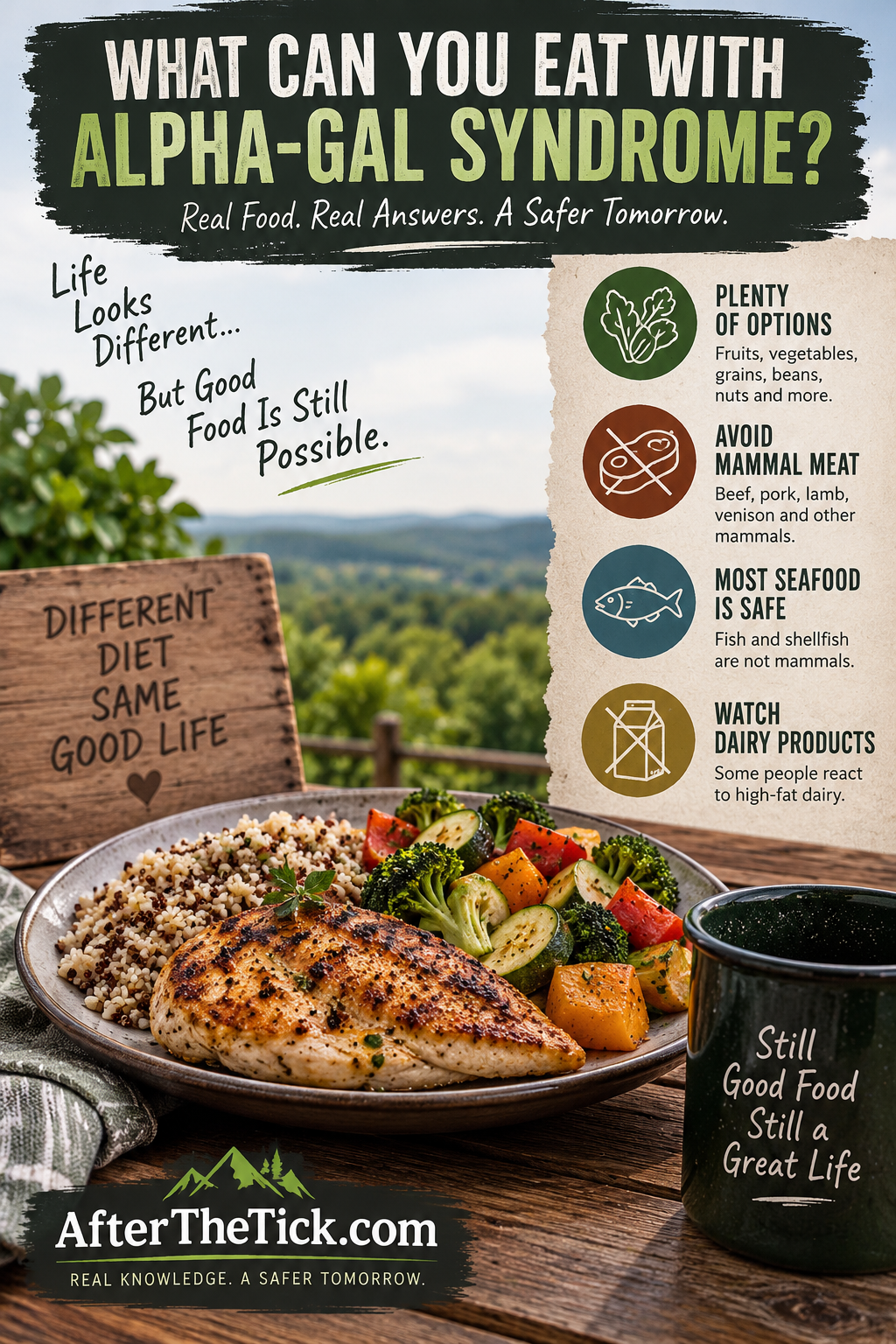
According to the CDC, foods that naturally do not contain alpha-gal include poultry, fish, seafood, eggs, fruits, and vegetables.
Other plant-based foods, including beans, rice, grains, nuts, and seeds, are also useful options.
But there’s an important difference between a naturally alpha-gal-free ingredient and a finished food prepared with several other ingredients.
A plain chicken breast is one thing.
Chicken cooked in bacon grease is another.
A baked potato is one thing.
A loaded baked potato covered in bacon, butter, and cheese introduces ingredients that may matter depending on your individual Alpha-gal sensitivity.
I would build meals around foods that naturally don’t contain alpha-gal, then check everything being added to them.
That approach feels much more manageable than trying to memorize hundreds of individual products.
The Foods I’d Build My Kitchen Around
If I were reorganizing a kitchen for someone with Alpha-gal, I wouldn’t start by buying a cart full of specialty products.
I’d start with ordinary groceries.
Chicken and Turkey
These would probably become two of my most-used proteins.
You can make an enormous variety of meals with chicken and turkey without needing complicated substitutions.
Think about:
- Grilled chicken breasts
- Oven-baked chicken thighs
- Homemade chicken noodle soup
- Turkey burgers
- Ground turkey tacos
- Chicken fajitas
- Turkey meatballs
- Chicken and rice
- Homemade chicken salad
- Roasted turkey with potatoes
The meat itself isn’t the problem because chickens and turkeys aren’t mammals.
The ingredients added during processing or cooking still need attention.
For example, some turkey sausages may use pork or beef casings. Certain prepared poultry products can contain mammalian broth, fat, or other ingredients.
I’d feel much more comfortable starting with plain, unseasoned poultry and adding seasonings I already understand.
Fish and Seafood
Fish and seafood offer another useful way to keep meals interesting.
Salmon, tuna, cod, shrimp, and other seafood don’t naturally contain alpha-gal.
A few easy meal ideas would be grilled salmon with rice, baked fish with potatoes, shrimp tacos, or tuna salad sandwiches.
I especially like fish as an option because it gives you something completely different from chicken.
Eating the same protein every day gets old.
Of course, someone can have a separate fish or shellfish allergy, so these aren’t automatically suitable for everybody.
And restaurant preparation matters. Fish cooked with butter, bacon, or mammalian stock may not fit someone’s individual avoidance plan.
Eggs
Eggs are one of the most useful foods I’d keep around.
They’re inexpensive compared with many meat products, easy to cook, and versatile.
Scrambled eggs, hard-boiled eggs, omelets, egg sandwiches, and breakfast burritos can all fit into a meal plan.
I’d also use eggs in homemade baked goods and other recipes.

Just remember that eggs themselves are different from the butter, cheese, sausage, or bacon commonly served alongside them.
Beans, Lentils, and Other Plant Proteins
Beans would be another staple.
Black beans, pinto beans, chickpeas, lentils, and other legumes are naturally free of alpha-gal.
They work in soups, tacos, chili, salads, rice bowls, and plenty of other meals.
One thing I’d watch closely is how canned or prepared beans are seasoned.
Some traditional bean dishes contain pork, bacon, ham, or lard.
Plain canned beans are often a simpler starting point, but I’d still check the ingredients.

Breakfast Doesn’t Have to Become Complicated
Breakfast is one of the first meals I’d rethink.
A traditional American breakfast often includes bacon, pork sausage, biscuits and gravy, or another mammalian ingredient.
That can make breakfast feel surprisingly limited at first.
But there are plenty of alternatives.
My First Breakfast Choice Would Be Eggs and Potatoes
Scrambled eggs with home fries and toast would be an easy place to start.
I’d cook the potatoes in an appropriate plant-based oil rather than bacon grease.
For the toast, I’d check the bread ingredients and choose a spread that fits the person’s dairy tolerance.
Simple.
Filling.
Nothing particularly unusual about it.
Oatmeal Is Another Easy Option
Oatmeal with fruit, cinnamon, nuts, or maple syrup can make a convenient breakfast.
You can prepare it with water or a suitable plant-based milk.
If you’re buying flavored oatmeal packets, read the ingredients rather than assuming every variety is identical.
Breakfast Sandwiches Can Still Work
I’d use an egg, a suitable English muffin or bread, and possibly turkey or chicken.
Cheese would depend on whether dairy is included in the person’s avoidance plan.
The important thing is realizing that breakfast doesn’t have to disappear just because traditional bacon and sausage are off the menu.
What Would I Eat for Lunch?
Lunch is where convenience starts to matter.
Most people don’t want to cook an elaborate meal in the middle of the day.
I’d want several options that can be made quickly or prepared ahead of time.
Chicken Salad Sandwiches
Homemade chicken salad is an easy option.
Use cooked chicken, mayonnaise with suitable ingredients, celery, and whatever seasonings you enjoy.
Check the bread.
Pack some fruit or vegetables alongside it.
That’s a normal lunch without requiring a specialty Alpha-gal product.
Turkey Sandwiches
Turkey sandwiches are another possibility, but I’d pay more attention to the turkey itself.
Plain cooked turkey is different from heavily processed deli meat.
Some processed products contain ingredients or flavorings that deserve a closer look.
If I wanted to keep things simple, I’d cook extra turkey or chicken at home and use leftovers for sandwiches.
Rice Bowls
Rice bowls are one of my favorite meal-building ideas because you can change them constantly.
Start with rice.
Add chicken, shrimp, beans, or another suitable protein.
Then add vegetables and a sauce made with ingredients that fit your needs.
You could make Mexican-inspired bowls, Asian-inspired bowls, or something as simple as chicken, rice, and roasted broccoli.
It’s a flexible way to avoid getting bored.


Dinner Is Where I’d Keep Things Familiar
I wouldn’t try to replace every family recipe overnight.
I’d look at the meals everyone already enjoys and figure out which ones can be adjusted.
Sometimes the change is surprisingly small.
Other times the recipe needs more work.
Spaghetti With Ground Turkey
Spaghetti is an obvious example.
Instead of ground beef or pork sausage, I’d use ground turkey.
Add tomato sauce, garlic, onions, and seasonings.
Check the sauce ingredients, especially if you’re buying a prepared meat-flavored variety.
Serve it with pasta and a side salad.
If dairy needs to be avoided, use a suitable alternative to Parmesan or leave it off.
The meal still feels like spaghetti night.
Chicken Tacos
Taco night doesn’t need to disappear.
Seasoned chicken, tortillas, lettuce, tomatoes, salsa, and other suitable toppings can make a great meal.
I’d check packaged taco seasoning and tortillas for ingredients that don’t fit the person’s avoidance plan.
If you normally use sour cream or cheese, those are individual decisions based on dairy tolerance.
Turkey Burgers
A turkey burger is probably one of the first substitutions I’d try for a family that enjoys hamburgers.
Use ground turkey, suitable seasonings, and a bun with acceptable ingredients.
Add lettuce, tomato, onion, pickles, and condiments.
I’d also be careful about the grill.
If beef burgers were just cooked on the same surface, I’d want to address potential cross-contact before preparing food for someone who reacts to mammalian ingredients.
Chicken and Rice Casserole
A homemade chicken and rice casserole can work well, too.
The key is checking the creamy ingredients and broth.
Some traditional casserole recipes use condensed soups, cheese, butter, or other dairy ingredients.
Those may or may not fit the person’s individual plan.
If dairy is restricted, I’d build the recipe around chicken, rice, vegetables, suitable broth, and a dairy-free sauce.
Homemade Chili
Chili is another meal I’d keep.
Ground turkey, beans, tomatoes, peppers, onions, and spices can make a hearty pot of chili.
I’d skip the beef and pork.
I’d also check any packaged chili seasoning or broth.
Serve it with suitable crackers or cornbread.
That’s a meal the entire family can eat without necessarily preparing two completely different dinners.
What About Milk, Cheese, Butter, and Ice Cream?
This is where I would stop following generic food lists and start paying attention to individual medical guidance.
Not everybody with Alpha-gal syndrome has to avoid dairy.
The CDC specifically notes that many people with AGS can tolerate milk products.
Other people react to dairy and need additional restrictions.
That’s a major difference.
I wouldn’t automatically throw away every carton of milk, block of cheese, or container of yogurt because someone received an Alpha-gal diagnosis.
But I also wouldn’t tell someone dairy is safe simply because another person with AGS tolerates it.
Your allergist should help determine what makes sense for your situation.
If dairy avoidance is necessary, plant-based alternatives can make everyday cooking easier.
Soy milk, oat milk, almond milk, and other suitable alternatives may be useful, depending on their ingredients and any separate allergies.
We’ll cover dairy in its own detailed guide because it’s too important to reduce to a blanket yes or no.
The Grocery Store Is Where I’d Slow Down
I think grocery shopping would be one of the biggest adjustments.
Not because every aisle suddenly becomes dangerous.
Because the foods that look perfectly ordinary can contain ingredients you weren’t expecting.
And most of us don’t read every word on every package until we have a reason to.
Start With Foods That Have Short Ingredient Lists
If I were shopping for someone newly diagnosed with AGS, I’d spend more time around basic ingredients.
Plain chicken.
Fresh vegetables.
Fruit.
Rice.
Potatoes.
Eggs.
Beans.
Fish.
Those foods are easier to understand than a frozen dinner with 35 ingredients.
That doesn’t mean processed foods are automatically unsafe.
It means the more complicated the product, the more questions you may need to answer.
Read the Entire Ingredient List
I’d pay particular attention to obvious mammalian ingredients such as beef, pork, lard, tallow, gelatin, and mammalian broth.
But I’d also remember that some ingredient names don’t tell you where the ingredient came from.
An ingredient may be plant-derived, animal-derived, or manufactured from different sources.
That doesn’t automatically make it dangerous.
It means the source may need clarification when the ingredient is relevant to your individual sensitivity.
Missouri Extension recommends contacting manufacturers when vague ingredients, such as natural flavors, make it difficult to determine whether a product contains mammalian-derived components.
I’d rather make one phone call than spend the entire evening guessing.
Our Food, Labels and Shopping guides are where we’re building practical help for these everyday decisions.
Don’t Assume the Allergen Statement Tells You Everything
This is an important distinction.
A packaged food might say:
Contains: Milk
That tells you milk is present.
For someone whose AGS requires avoiding dairy, that’s useful information.
But what if the package doesn’t list milk?
That doesn’t automatically mean the product contains no mammalian ingredients.
Alpha-gal itself is not one of the nine major allergens that must be declared under federal food-allergen labeling rules.
Some mammalian ingredients may appear elsewhere in the ingredient list, and some source information may not be obvious.
That’s why I’d read the entire label instead of relying only on the bold allergen statement.
Five Foods I’d Check More Carefully Than They Look
Some foods are worth a second look because the mammalian ingredient isn’t always obvious.
1. Chicken Sausage
Chicken sausage sounds like an obvious alternative to pork sausage.
But some products use pork or beef casings.
I’d check the casing information before buying.
2. Refried Beans
Beans themselves are fine from an alpha-gal standpoint.
Traditional refried beans may contain lard.
I’d look for products made with suitable vegetable oils instead.
3. Vegetable Soup
A soup can be loaded with vegetables and still contain beef broth or another mammalian stock.
I’d check the broth rather than judging the soup by its name.
4. Gummy Candy
Some gummy candies contain gelatin derived from mammals.
Not everyone with AGS reacts to gelatin, but it matters for some people.
I’d check the ingredients and follow the individual’s avoidance plan.
5. Restaurant French Fries
Potatoes don’t naturally contain alpha-gal.
But cooking fat, seasoning, toppings, and shared fryers can complicate the finished food.
I’d ask what oil or fat is used and whether the fries share equipment with foods containing mammalian ingredients when cross-contact is a concern.
These are the kinds of details that can make everyday eating feel confusing at first.
The solution isn’t necessarily avoiding every packaged or restaurant food.
It’s knowing which questions matter.
A Simple Alpha-Gal Grocery List I’d Start With
If I were helping someone build their first grocery list after diagnosis, I’d keep it familiar.
Proteins
- Plain chicken breasts or thighs
- Ground turkey
- Eggs
- Fish
- Shrimp, if tolerated
- Plain beans
- Lentils
- Tofu, if tolerated
Fruits and Vegetables
- Apples
- Bananas
- Berries
- Lettuce
- Tomatoes
- Potatoes
- Broccoli
- Carrots
- Peppers
- Onions
Pantry Foods
- Rice
- Oatmeal
- Pasta with suitable ingredients
- Plain canned beans
- Tomato sauce
- Olive oil
- Suitable vegetable oil
- Herbs and spices
- Peanut butter, if tolerated
- Nuts and seeds, if tolerated
Other Useful Foods
- Bread with acceptable ingredients
- Tortillas made without mammalian ingredients
- Suitable plant-based milk
- Dairy products only if included in the person’s medical plan
- Suitable sauces and condiments
This isn’t a universal safe-food prescription.
It’s a practical starting point built around foods that naturally lack alpha-gal, with reminders to check processed ingredients and personal allergies.
What I’d Cook for the First Seven Days
If I were planning meals for someone newly adjusting to AGS, I wouldn’t make the first week complicated.
I’d choose familiar meals and repeat ingredients to keep grocery shopping manageable.
Monday
Breakfast: Scrambled eggs and toast
Lunch: Chicken salad sandwich with fruit
Dinner: Ground turkey spaghetti and green beans
Tuesday
Breakfast: Oatmeal with bananas
Lunch: Leftover spaghetti
Dinner: Baked chicken, roasted potatoes, and broccoli
Wednesday
Breakfast: Eggs and home fries
Lunch: Chicken and rice bowl
Dinner: Turkey tacos with lettuce, tomatoes, and salsa
Thursday
Breakfast: Oatmeal with berries
Lunch: Leftover taco bowl
Dinner: Baked fish, rice, and vegetables
Friday
Breakfast: Egg sandwich
Lunch: Tuna salad with crackers and fruit
Dinner: Homemade turkey burgers and oven-baked fries
Saturday
Breakfast: Breakfast burrito with eggs and potatoes
Lunch: Leftover turkey burgers
Dinner: Chicken fajitas with peppers and onions
Sunday
Breakfast: Eggs, toast, and fruit
Lunch: Chicken noodle soup
Dinner: Turkey chili with beans and cornbread made from suitable ingredients
I’d adjust every meal for the person’s individual dairy restrictions, other allergies, and cross-contact needs.
The point of this plan isn’t to create a perfect medical diet.
It’s to show that you can still eat ordinary, satisfying meals without mammalian meat.
I’d Make One Important Change to Family Cooking
If one person in the house has Alpha-gal and everyone else continues eating beef or pork, I’d pay attention to how meals are prepared.
For example, suppose someone cooks hamburgers for the family and turkey burgers for the person with AGS.
That sounds straightforward.
But what happens if both kinds of burgers are cooked on the same greasy grill?
What if the same spatula is used?
What if bacon grease is used to cook something that otherwise looks safe?
This is exactly the kind of thing that can make eating with Alpha-gal more complicated than simply avoiding a piece of bacon.
Green beans may look perfectly fine, but what were they cooked with?
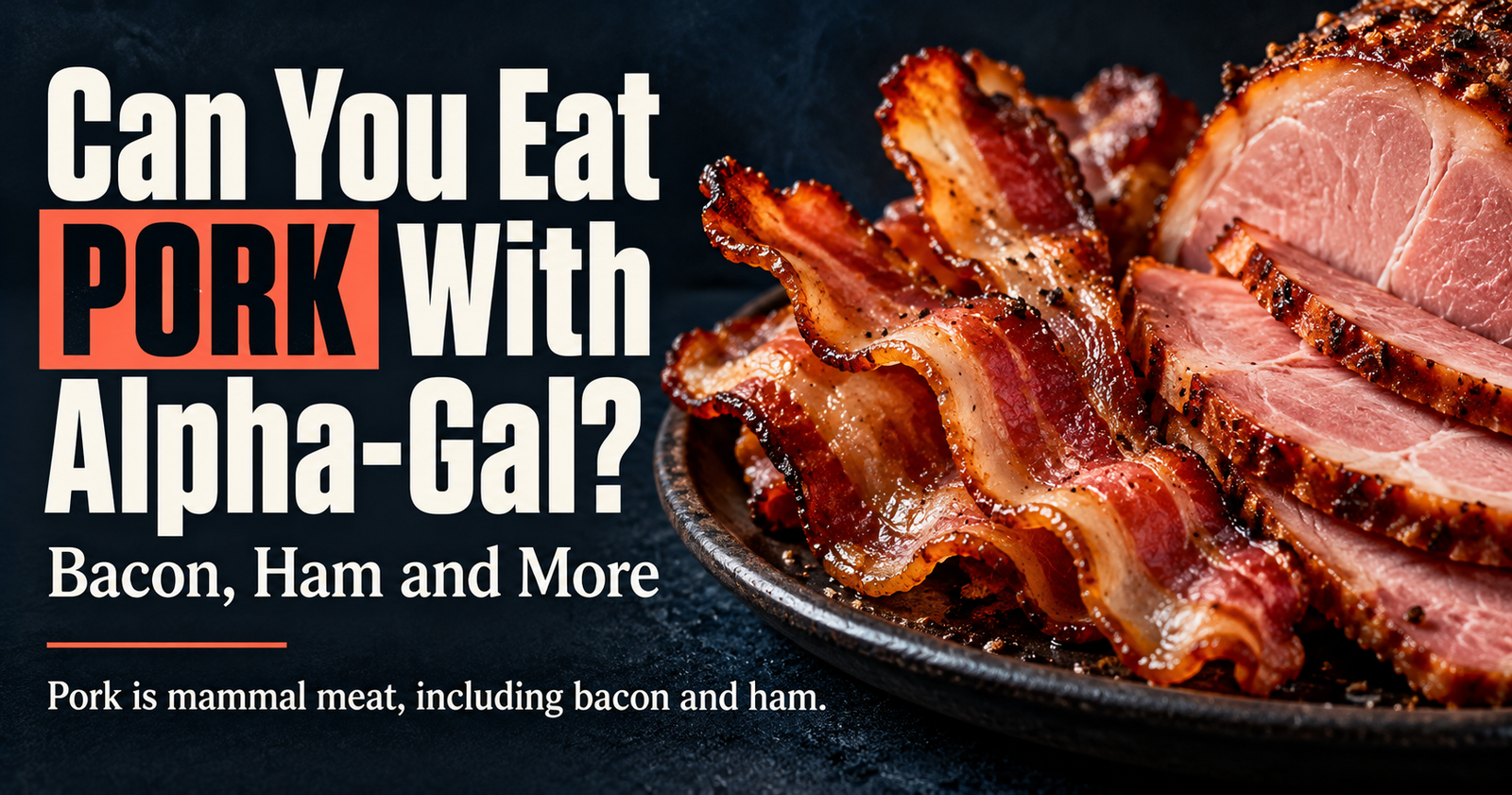
The same goes for fried potatoes, beans, greens, gravy, cornbread, vegetables, and plenty of traditional home-cooked foods. Bacon grease, lard, beef tallow, meat drippings, or mammalian broth can turn an otherwise straightforward dish into something that deserves a closer look. Our guide to pork, bacon, and hidden ingredients looks more closely at how these ingredients can show up in everyday meals.
I wouldn’t assume that vegetables are automatically safe simply because vegetables themselves don’t contain alpha-gal.
I’d ask how they were prepared.
That becomes especially important at restaurants, family gatherings, church dinners, potlucks, and cookouts where you didn’t prepare the food yourself.
What About Foods Fried in Beef Tallow?
This is another situation where the cooking method matters.
Potatoes don’t naturally contain alpha-gal.
But french fries cooked in beef tallow involve a mammalian-derived fat.
The same issue can come up with onion rings, fried chicken, or another food that would otherwise seem unrelated to mammals.
I think this is one of the easiest mistakes to make when you’re first figuring out Alpha-gal.
You look at the main ingredient instead of the entire preparation process.
That’s why I’d eventually get comfortable asking simple questions such as:
“What kind of oil are the fries cooked in?”
You don’t need to explain your entire medical history to ask that question.
Chicken Can Be Simple Until Someone Wraps It in Bacon
Chicken itself isn’t a mammal.
That’s the easy part.
Then restaurants do restaurant things.
Chicken gets wrapped in bacon.
It’s topped with cheese.
It’s cooked in butter.
It’s served with gravy.
It’s tossed into a sauce with ingredients you haven’t seen.
Suddenly “I’ll just order the chicken” isn’t quite enough information.
That doesn’t mean eating out has to become impossible.
It means I would get used to separating the basic food from everything added to it.
Plain grilled chicken may be straightforward.
A bacon-and-cheese-smothered chicken breast with an unknown sauce is a different question.
Fish and Seafood Give You Another Big Category to Work With
Fish and shellfish aren’t mammals either.
That gives you another large group of foods that don’t naturally contain alpha-gal.
Salmon, tuna, cod, tilapia, shrimp, crab, and other seafood can all provide options.
Again, preparation matters.
A piece of salmon might be brushed with butter.
Shrimp may be prepared with butter or served in a creamy sauce.
Fish can be breaded with ingredients you haven’t checked.
A seafood chowder can contain dairy.
So I wouldn’t turn “fish is okay” into “every fish dish everywhere is automatically okay.”
That’s not how real food works.
But having poultry and seafood available still leaves you with far more meal possibilities than the phrase “meat allergy”initially makes it sound like you have.
Eggs Are Another Food I Would Keep in Mind
Eggs come from birds.
They aren’t mammalian meat.
Eggs themselves aren’t considered a natural source of alpha-gal.
That makes them useful for breakfast and plenty of other meals.
Scrambled eggs.
Hard-boiled eggs.
Omelets.
Egg sandwiches.
Breakfast bowls.
Baked dishes.
But here’s the same pattern again.
Scrambled eggs cooked in bacon grease aren’t the same as eggs cooked in a plant oil.
An omelet stuffed with sausage and cheese has other ingredients to consider.
Biscuits and gravy beside the eggs introduce another completely different set of ingredients.
The egg isn’t necessarily the complicated part.
The stuff surrounding it is.
Fruits and Vegetables Don’t Suddenly Become Off-Limits
This is where I think newly diagnosed people can breathe a little easier.
Apples didn’t change.
Bananas didn’t change.
Strawberries didn’t change.
Potatoes didn’t change.
Tomatoes, corn, green beans, broccoli, lettuce, carrots, peppers, onions, cucumbers, peaches, blueberries, and the rest of the produce aisle aren’t mammals.
Alpha-gal isn’t naturally hiding inside a tomato.
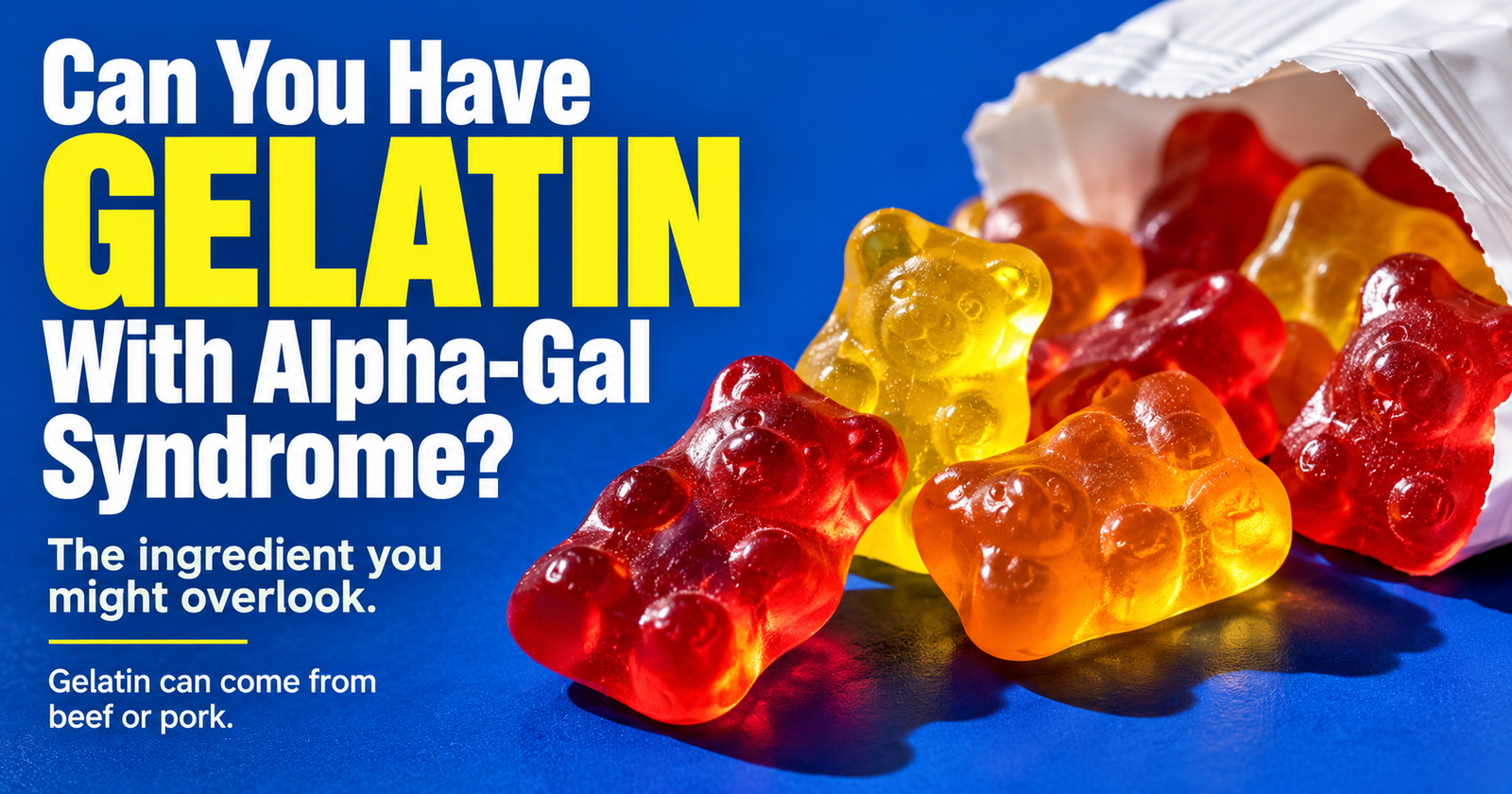
That sounds ridiculously obvious, but when you’ve just been told that gelatin, dairy, meat broth, and certain medications may matter, it’s easy to start looking suspiciously at everything.
I wouldn’t.
I’d build meals around the huge number of basic foods that aren’t mammalian-derived and then investigate the ingredients that actually need investigating.
Grains Give You Plenty to Work With Too
Rice, oats, wheat, corn, barley, and other grains aren’t mammals.
That means things such as plain rice, oatmeal, pasta, tortillas, breads, and cereals can potentially fit into an Alpha-gal-conscious diet.
The word plain matters.
Packaged foods can contain additional ingredients.
Bread may contain dairy.
Instant mashed potatoes may contain milk ingredients.
Flavored rice mixes may contain broth.
Certain cereals or snacks may contain gelatin or other ingredients worth investigating.
So instead of thinking:
“Can I eat bread?”
I’d eventually start thinking:
“What’s in this particular bread?”
That’s a much more useful way to shop.
Beans Can Make Meals Much Easier
Beans are another food I’d keep around.
Black beans, kidney beans, chickpeas, pinto beans, lentils, and other legumes can provide protein and make meals considerably more filling.
But canned or restaurant-prepared beans deserve the same preparation question we’ve been using throughout this article.
Were they made with pork?
Bacon?
Lard?
A meat broth?
That’s particularly relevant with refried beans, baked beans, and some traditional bean dishes.
A bag of dried black beans and a restaurant side of refried beans may start with a similar plant food and end up being two very different dishes.
Nuts, Seeds, and Plant-Based Foods Open Up Even More Options
Peanuts, almonds, cashews, walnuts, pecans, sunflower seeds, pumpkin seeds, and many other plant foods don’t naturally contain alpha-gal.
Neither do plant oils such as olive, canola, sunflower, or avocado oil.
These can make it easier to build satisfying meals without trying to recreate every mammalian food you used to eat.
And that’s one thing I wouldn’t do after an Alpha-gal diagnosis:
I wouldn’t spend every meal thinking about what I’m not allowed to have.
I’d start finding foods I genuinely like that happen to fit.
That’s a much easier way to live long term.
Grocery Shopping Gets Easier Once You Stop Checking Everything Equally
At first, I can understand wanting to inspect every package like you’re looking for a hidden clue.
Eventually, I’d want a system.
I’d mentally divide the grocery store into three groups.
Foods I can recognize immediately
Fresh fruits.
Fresh vegetables.
Plain poultry.
Plain fish.
Eggs.
Rice.
Beans.
Nuts.
Basic plant foods.
Those are relatively straightforward starting points.
Foods where I’d read the ingredient list
Bread.
Crackers.
Cereal.
Packaged meals.
Sauces.
Gravy mixes.
Soups.
Candy.
Desserts.
Flavored snacks.
Prepared frozen foods.
That’s where mammal-derived ingredients can become less obvious.
Foods I’d investigate more carefully
Anything containing gelatin.
Anything containing mammalian meat.
Products made with lard or tallow.
Foods containing meat broth or stock.
Foods with ingredients I don’t understand.
Products that have caused a previous reaction.
That kind of system makes much more sense to me than treating a banana and a gummy candy like they require the same amount of research.
They don’t.
Dairy Is Where I Would Not Copy Somebody Else’s Diet
Dairy deserves special attention because people with Alpha-gal do not all handle it the same way.
Milk comes from mammals and can contain alpha-gal.
However, many people with AGS tolerate dairy products.
Some don’t.
That creates one of the biggest problems I see with generic Alpha-gal food lists.
One list says dairy is fine.
Another says never touch it.
Then somebody newly diagnosed has no idea who to believe.
The answer is that individual tolerance matters.
I wouldn’t remove every dairy product simply because another person with Alpha-gal has to avoid them.
And I wouldn’t assume dairy is safe for me because somebody else drinks milk every day.
This is something I’d work through using my own reaction history and my allergist’s guidance.
We’re going to give dairy its own full article because “Can you have dairy with Alpha-gal?” deserves a much better answer than yes or no.
Gelatin Is Different From a Piece of Meat, but It Can Still Matter
Gelatin is another ingredient that catches people by surprise.
It can be produced from mammalian tissues, commonly from pigs or cattle.
That means it can matter for some people with AGS.
You might encounter gelatin in foods such as certain gummy candies, marshmallows, gelatin desserts, and other products.
It can also appear outside ordinary food.
This is where reading labels becomes more useful than memorizing product categories.
I wouldn’t assume every candy is a problem.
I wouldn’t assume every marshmallow is safe.
I’d check the actual product.
And because formulations can change, I wouldn’t assume the package I bought six months ago is guaranteed to have the same ingredients forever.
“Natural Flavors” Can Make People Nervous
Once you start reading Alpha-gal groups and forums, vague ingredients can become scary fast.
Natural flavors.
Flavoring.
Mono- and diglycerides.
Glycerin.
Stearates.
Dozens of unfamiliar words.
It’s easy to reach the point where you feel like you need a chemistry degree to buy crackers.
I wouldn’t start by assuming every ambiguous ingredient is secretly mammalian and dangerous.
Individual sensitivity varies, ingredient sourcing can vary, and not every theoretical mammalian-derived ingredient creates the same practical risk for every person with AGS.
If an ingredient is genuinely important for your level of sensitivity and the source isn’t clear, that’s when I’d contact the manufacturer or discuss the issue with an allergist or dietitian familiar with AGS.
The goal isn’t to become afraid of long words.
It’s to identify the exposures that actually matter to you.
I Would Build Five or Six “No-Brainer” Meals First
If I were helping somebody who had just been diagnosed and was standing in the kitchen thinking, What am I supposed to eat now?, I wouldn’t begin with 150 obscure ingredients.
I’d begin with dinner.
Find five or six meals you can make confidently.
Maybe that’s grilled chicken, baked potato, and vegetables.
Maybe it’s salmon with rice and broccoli.
Maybe it’s chicken tacos using ingredients you’ve checked.
Maybe it’s pasta with a tomato-based sauce and a protein that works for you.
Maybe it’s eggs, potatoes, and fruit for breakfast.
Maybe it’s a rice bowl with chicken, beans, vegetables, and a sauce you’ve verified.
Your specific meals will depend on your allergies, preferences, and medical guidance.
The point is to create a small group of meals where you don’t have to think so hard.
Once those become normal, add more.
Breakfast Doesn’t Have to Disappear Because Bacon Does
Breakfast is a good example of how mindset can change everything.
If your normal breakfast has always been bacon, sausage, biscuits and gravy, milk, and buttered toast, an Alpha-gal diagnosis can make breakfast look ruined.
But breakfast isn’t bacon.
Eggs.
Oatmeal.
Fruit.
Potatoes prepared with an appropriate oil.
Toast made from ingredients that work for you.
Peanut or other nut butter if tolerated.

Poultry-based breakfast products may also be options, but I’d still read the ingredients rather than assuming that the word “turkey” or “chicken” on the front guarantees every ingredient is mammal-free.
That’s a recurring lesson with Alpha-gal:
Read past the name on the front of the package.
Lunch Can Be Surprisingly Normal
Chicken sandwiches.
Turkey sandwiches with ingredients you’ve checked.
Tuna.
Salads.
Rice bowls.
Leftovers from dinner.
Soups made with appropriate broth.
Bean-based meals.
Wraps.
Peanut butter sandwiches.
There are plenty of possibilities.
The adjustment is often less about finding exotic “Alpha-gal food” and more about removing or replacing the mammalian ingredients that used to sneak into ordinary meals.
That’s a much more manageable problem.
Dinner Is Where I Would Keep Things Simple at First
Dinner is where families can get frustrated because nobody wants to prepare three completely different meals.
I wouldn’t try.
I’d look for meals where most of the family can eat the same base.
Chicken fajitas.
Tacos with an appropriate protein.
Spaghetti.
Grilled chicken and vegetables.
Fish with potatoes.
Rice bowls.
Stir-fry.
Chicken and rice.
Bean-based chili prepared without mammalian meat or broth.
Then family members can customize toppings or sides when needed.
That feels a lot more normal than putting the person with Alpha-gal at one end of the table with a completely separate “special meal.”
Eating at Someone Else’s House Takes a Different Skill
This can be harder than eating at home because you don’t control the kitchen.
And people mean well.
Someone may tell you:
“There’s no beef in it.”
But they cooked the green beans with bacon.
Or used beef broth.
Or greased the pan with something you avoid.
They aren’t trying to hurt you.
They simply don’t know what questions matter.
That’s why I’d rather ask a couple of specific questions than say:
“Is this Alpha-gal safe?”
Most people have no idea what that means.
Ask:
“Did you use any beef, pork, bacon grease, lard, meat broth, gelatin, or dairy in this?”
The exact questions depend on what you personally need to avoid.
Specific questions get useful answers.
Restaurants Require the Same Kind of Thinking
I wouldn’t walk into a restaurant expecting the server to understand Alpha-gal syndrome in detail.
Some will.
Many won’t.
Instead, I’d translate the condition into kitchen questions.
What is this cooked in?
Does the soup contain beef broth?
Is bacon or pork used in the beans?
Are the fries cooked in beef tallow?
Does this sauce contain dairy?
Can the chicken be prepared plain?
Those questions are much easier for restaurant staff to answer.
We’ll get much deeper into this in our Cooking and Eating Out section because restaurants create an entirely different set of real-world problems than grocery shopping does.
You Don’t Need to Memorize the Entire Alpha-Gal World in One Weekend
This is probably what I’d want someone newly diagnosed to hear most.
You don’t need to know everything tonight.
You don’t need to memorize every possible mammalian derivative.
You don’t need to empty the entire pantry before breakfast.
You don’t need to copy the most restrictive diet you find online.
Start with what your healthcare provider has told you to avoid.
Understand the major sources.
Learn your own reaction history.
Build a handful of meals you trust.
Then expand from there.
Our Food, Labels and Shopping section is where I’m going to keep breaking these questions down individually so you don’t have to solve every food problem from one enormous list.
What I Would Put in the Cart First
If I were starting from scratch and needed to build several basic meals, I’d think in categories rather than hunting for products labeled “Alpha-gal friendly.”
I’d start with foods such as plain poultry or fish, eggs, vegetables, fruit, rice, potatoes, beans, pasta or grains with ingredients I’ve checked, nuts or seeds I tolerate, and plant-based cooking oils.
Then I’d add sauces, breads, seasonings, snacks, and convenience foods one at a time after checking what is actually in them.
That gives you food for real meals immediately.
You’re not standing in the grocery store with an empty cart while Googling 47 ingredients.
And as you find packaged foods that work well for your needs, save them.
Take a picture.
Keep a note on your phone.
Build your own reliable grocery list.
That list will eventually become far more useful than somebody else’s generic Alpha-gal shopping list because it’s based on the products you actually buy and tolerate.
The Goal Isn’t to Eat Like an “Alpha-Gal Patient”
It’s to eat like yourself again.
Maybe dinner looks a little different.
Maybe you check labels you never used to look at.
Maybe restaurant questions become second nature.

Maybe you discover that some foods you were terrified of after diagnosis are things your allergist says you don’t personally need to avoid. That kind of change in what you can tolerate is part of the broader question of how Alpha-gal sensitivity may change.
And maybe you find replacements for foods you really do need to give up.
That’s the part of living with Alpha-gal that I want to focus on here.
The medical information matters. Understanding what Alpha-gal syndrome actually is matters.
But eventually you have to close the browser and make dinner.
You still need breakfast tomorrow.
You still need groceries next week.
Your family still wants to eat.
And once you stop looking at Alpha-gal as one enormous list of forbidden foods and start looking at individual ingredients, individual tolerance, and meals you already know how to make, food can begin feeling normal again.
Calla Mercer writes about the personal side of living with Alpha-gal syndrome for After The Tick, including food, family meals, shopping, eating out, travel, and making everyday life feel manageable again.