
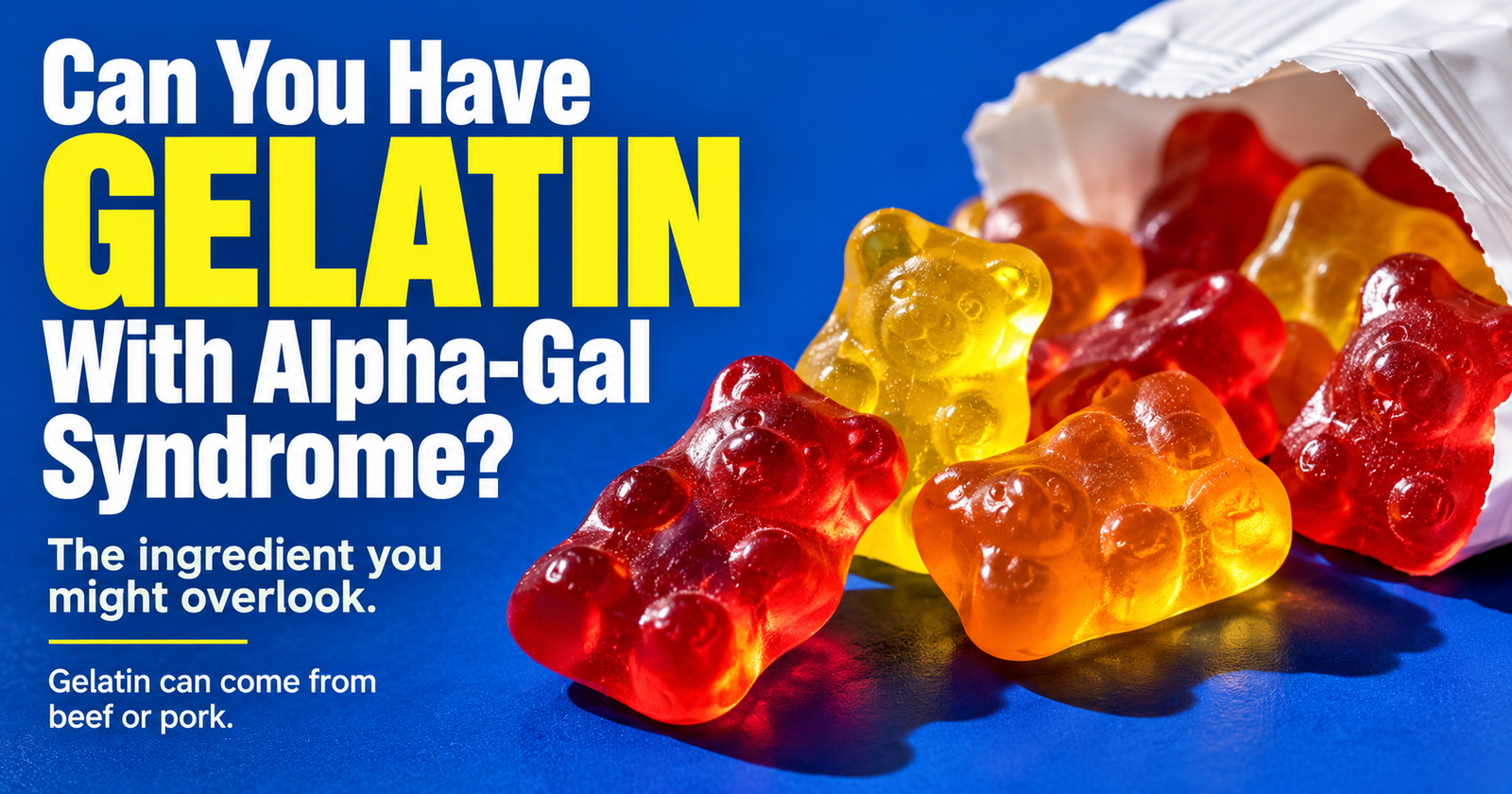
When you’re dealing with Alpha-gal syndrome, gelatin is one of those ingredients that can make an ordinary trip to the grocery store surprisingly complicated.
You expect to check meat. You probably expect to check dairy. But gummy bears? Marshmallows? A bottle of vitamins?
Those aren’t necessarily the first things that come to mind when somebody tells you that a tick bite has left you dealing with an allergy involving mammalian products.
Yet gelatin can be made from pigs and cattle, and that means it may contain alpha-gal. Gelatin is one example of the less obvious exposures discussed in Alpha-gal syndrome.
So can you have gelatin with Alpha-gal syndrome? Some people tolerate it, but others react to mammalian gelatin and need to avoid it. For context on other ingredients, foods, symptoms, and avoidance decisions, readers can review these Alpha-gal ingredient questions.
The answer depends on where the gelatin came from, your individual sensitivity, your reaction history, and the guidance you’ve received from your allergist.
What I wouldn’t do is assume that gelatin is harmless simply because it doesn’t look anything like meat.
Why Gelatin Can Be a Problem With Alpha-Gal Syndrome
Gelatin is made by processing collagen, a protein found in animal connective tissues.
Commercial gelatin commonly comes from pigs or cattle.
That’s where the Alpha-gal concern begins.
Alpha-gal is a sugar molecule found in most non-primate mammals. When someone develops Alpha-gal syndrome, their immune system can react to that molecule. That biological distinction helps explain why Alpha-gal is not simply sugar molecule found in most non-primate mammals.
Although gelatin is primarily protein, mammalian gelatin can contain alpha-gal.
That means the ingredient can potentially trigger a reaction in someone who is sensitive to it.
The animal source matters
When I’m looking at a product containing gelatin, the first question I’d want answered is:
Where did the gelatin come from?
The possibilities include:
- Porcine gelatin: Made from pigs.
- Bovine gelatin: Made from cattle.
- Fish gelatin: Made from fish rather than mammals.
Porcine and bovine gelatin are the sources that raise particular Alpha-gal concerns.
Fish gelatin doesn’t naturally contain alpha-gal in the same way mammalian gelatin does, although someone could still have an unrelated fish allergy.
That distinction is useful because gelatin isn’t necessarily one single ingredient with one single animal source.
Unfortunately, the average grocery-store label doesn’t always tell you which animal was used.
Does Every Person With Alpha-Gal Need to Avoid Gelatin?
No, and this is something I think deserves more attention.
Alpha-gal syndrome isn’t identical for everyone.
Some people primarily react to mammalian meat.
Others have additional sensitivity to dairy, gelatin, or other mammal-derived ingredients.
The CDC specifically recognizes that some people with AGS may react to gelatin made from beef or pork.
But that doesn’t mean every person diagnosed with Alpha-gal will react to every gelatin-containing food.
Why I wouldn’t copy somebody else’s avoidance list
Imagine two people who both have diagnosed Alpha-gal syndrome.
One has reactions after eating beef and pork but has tolerated certain other mammalian products under their allergist’s guidance.
Another has experienced reactions involving additional mammal-derived ingredients and follows a more restrictive avoidance plan.
Those two people shouldn’t necessarily have identical grocery lists.
The important thing is understanding what applies to your particular condition.
I wouldn’t intentionally eat gelatin to find out whether I react to it.
If gelatin is a concern, I’d discuss it with my allergist rather than experimenting at home.
A previous mild reaction doesn’t guarantee the next reaction will also be mild.
Why Gelatin Is Easy to Overlook
Gelatin is different from most of the foods people immediately associate with Alpha-gal.
A hamburger is obvious.
A pork chop is obvious.
Even bacon grease becomes easier to recognize once you understand the mammalian connection.
But gelatin?
It can show up in foods that look completely unrelated to meat.
That’s what makes it frustrating.
You can walk through the candy aisle, baking aisle, refrigerated section, and pharmacy and encounter gelatin in several completely different products.
The ingredient itself doesn’t announce where it came from.
And that’s why I would treat gelatin as an ingredient worth investigating rather than relying on how a product looks.
Can You Eat Gummy Bears With Alpha-Gal Syndrome?
Gummy bears are one of the first products I’d check.
Many traditional gummy candies use gelatin to create their familiar chewy texture.
And that gelatin may come from pigs or cattle.
The frustrating part is that two bags of gummy candy sitting beside each other can have completely different ingredient lists.
One might contain gelatin.
Another might use pectin or starch instead.
What I’d look for on the package
I’d turn the package around and find the ingredient list.
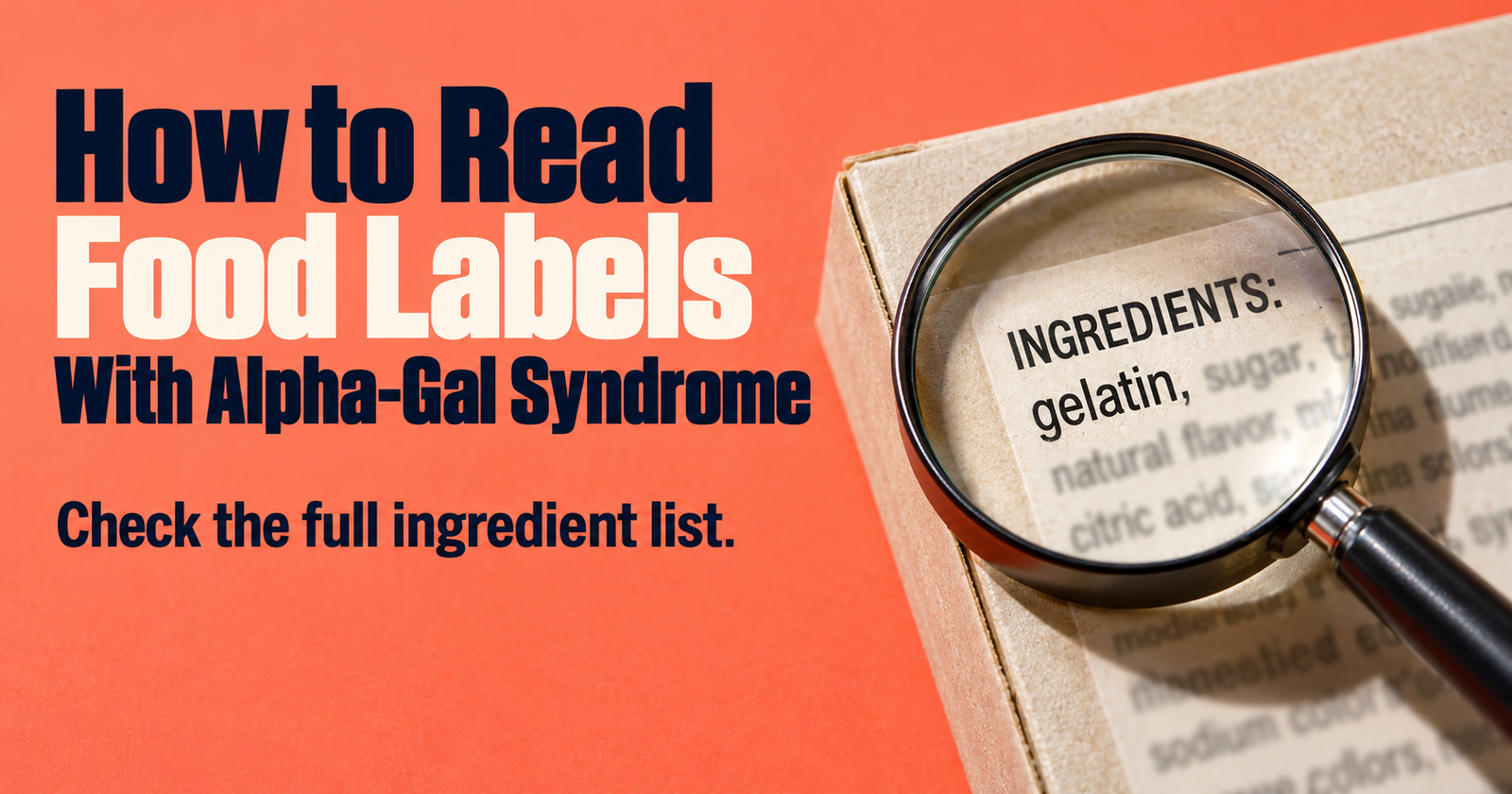
If it says gelatin, I’d want to know the source before deciding whether it fits my individual Alpha-gal avoidance plan.
If the candy uses pectin instead, that’s a different situation.
Pectin is a plant-derived ingredient commonly used to help foods gel or thicken.
A gummy candy made with pectin rather than mammalian gelatin may be an option, provided the rest of the ingredients are appropriate.
But I wouldn’t assume that every candy labeled vegan is automatically suitable for every allergy.
I’d still read the full ingredient list.
Are all gummy candies made with gelatin?
No.
That’s actually good news.
There are gummy candies made without animal gelatin.
Some use pectin.
Others use starches or different plant-based gelling ingredients.
This is where I think shopping gets easier once you know what you’re looking for.
Instead of assuming the entire gummy candy aisle is off-limits, you can start identifying which products use ingredients that fit your needs.

Can You Eat Marshmallows With Alpha-Gal Syndrome?
Marshmallows are another product that can catch people off guard.
Traditional marshmallows commonly contain gelatin.
That gelatin helps give them their soft, springy texture.
And because it may come from pigs or cattle, it deserves attention when you’re managing Alpha-gal.
The campfire example
Think about an ordinary family cookout.
Someone brings graham crackers, chocolate, and marshmallows.
Everybody starts making s’mores.
Nobody is cooking hamburgers for you. Nobody is offering bacon. You’re just making dessert.
But the marshmallow may contain mammalian gelatin.
The chocolate may contain dairy, which matters for some people with AGS.
Suddenly, even a simple s’more has two ingredients worth checking.
That’s the kind of everyday situation where understanding Alpha-gal ingredients becomes more useful than memorizing a list of forbidden meats.
Are there marshmallows without gelatin?
Yes.
Some marshmallows are made without animal gelatin.
Vegan marshmallows often use alternative ingredients to create a similar texture.
If I needed to avoid mammalian gelatin, that’s where I’d start looking.
I’d still check the entire package, especially if dairy or another ingredient is also a concern.
The goal isn’t necessarily to give up s’mores.
It’s to find ingredients that work with your individual dietary restrictions.
What About Jell-O and Gelatin Desserts?
This is one of the most obvious places gelatin appears once you know what you’re looking for.
Traditional gelatin desserts generally depend on gelatin to set.
That includes many flavored gelatin desserts, molded gelatin dishes, and homemade recipes using unflavored gelatin.
The important distinction is between gelatin-based desserts and desserts made with other gelling ingredients.
What about Jell-O pudding?
This is where I would stop assuming that every product from the same brand uses the same ingredients.
A flavored gelatin dessert and a pudding mix are different products.
Some pudding products rely on starches and other thickeners rather than gelatin.
Others may contain dairy or additional ingredients that matter for your particular situation.
I’d check the exact product rather than deciding that everything with the same brand name must contain gelatin.
What could I use instead?
For homemade desserts, there are several alternatives worth investigating.
Agar-agar is a plant-free, algae-derived gelling ingredient commonly used as a gelatin alternative.
Pectin is another option, particularly in fruit-based preparations.
Cornstarch can thicken puddings and sauces, although it doesn’t create exactly the same texture as gelatin.
These ingredients behave differently in recipes.
Agar-agar, for example, often sets more firmly than gelatin and generally needs to be heated appropriately to work.
So I wouldn’t automatically substitute the same amount and expect identical results.
But having alternatives means gelatin doesn’t have to be the only way to make a dessert.
Gelatin Can Hide in Foods That Aren’t Candy
This is where checking labels becomes a habit rather than something you only do in the candy aisle.
Gelatin may be used as a stabilizer, thickener, or texturizing ingredient.
Depending on the product, you might encounter it in:
- Certain yogurts
- Some refrigerated desserts
- Gummy snacks
- Marshmallows
- Gelatin desserts
- Some mousse-style desserts
- Certain prepared foods
- Some supplements and capsules
That doesn’t mean every product in those categories contains gelatin.
A plain yogurt and a particular flavored yogurt may have different ingredients.
A pudding may use starch instead.
A gummy snack may use pectin.
The ingredient list matters more than the type of food.
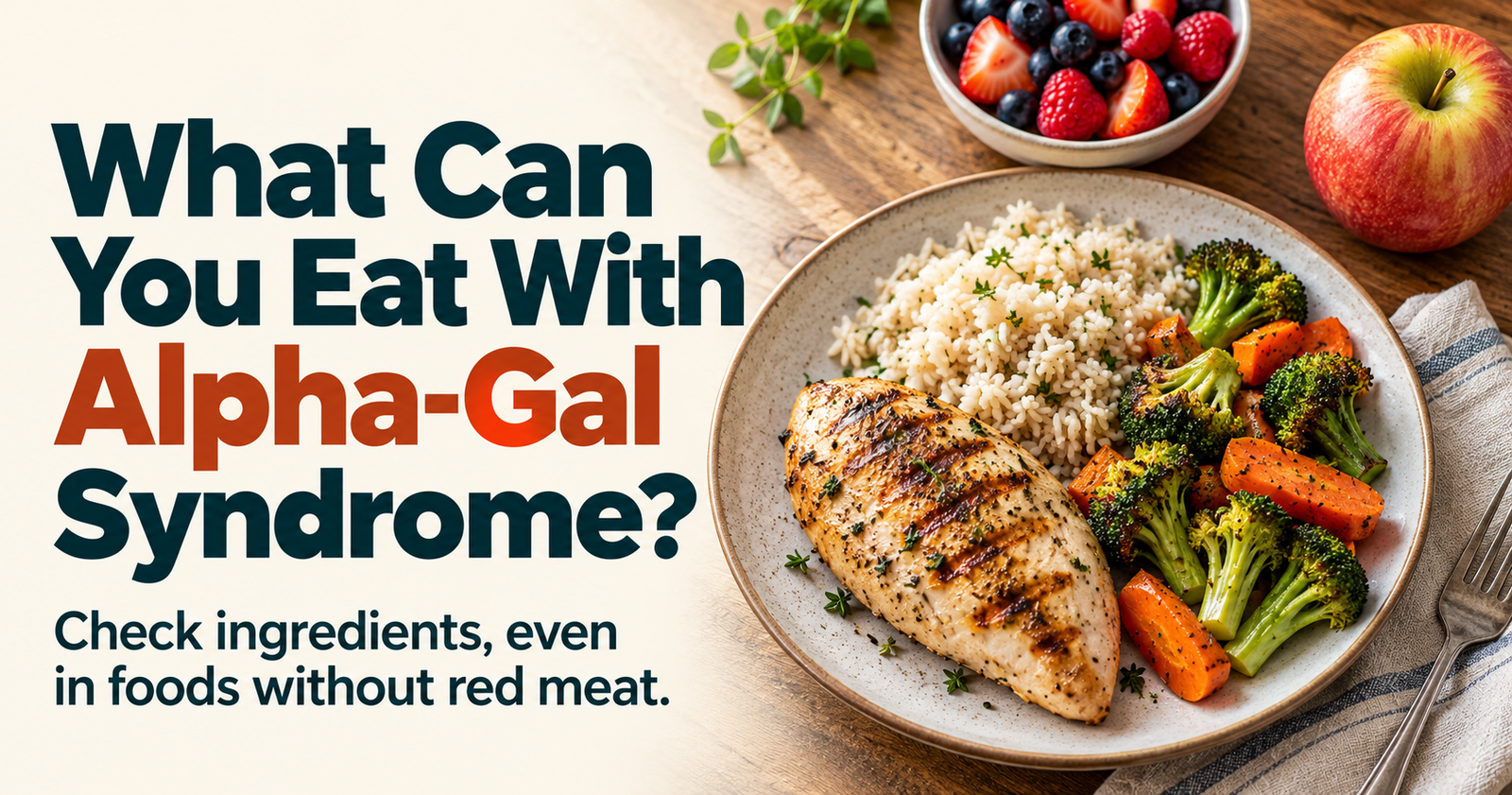
And this is exactly why I’d keep the broader question of what you can eat with Alpha-gal syndrome separate from individual ingredient guides like this one.
Once you understand the general food categories, you can start investigating specific ingredients without treating every grocery purchase like a medical emergency.
Is Gelatin Always Listed as Gelatin on Food Labels?
Usually, when gelatin is intentionally used as an ingredient in a packaged food, you’ll see the word gelatin in the ingredient list.
But that doesn’t necessarily tell you whether it came from a pig, cow, or fish.
And that’s the detail you may need.
What I’d do when the source isn’t listed
I’d start with the manufacturer’s product information.
If that doesn’t answer the question, I’d contact the company.
I would ask something specific:
“Is the gelatin in this product derived from pork, beef, fish, or another source?”
That’s much more useful than asking whether the product is Alpha-gal safe.
A customer-service representative may not know what Alpha-gal syndrome is.
But the company may be able to identify the source of its gelatin.
If the company can’t confirm the source and my medical guidance requires avoiding mammalian gelatin, I wouldn’t assume the product is suitable.
I’d look for a verified alternative.
Why the Allergy Statement May Not Tell You Enough
This is a detail I would pay close attention to.
You might turn a package over and see:
Contains: Milk, Soy
Or maybe there’s no separate allergen statement at all.
That doesn’t necessarily answer the gelatin question.
In the United States, major food allergen labeling rules don’t require pork or beef gelatin to be identified as a major allergen simply because it comes from a mammal.
Gelatin can still appear in the ingredient list without a separate warning identifying its animal source.
So if I needed to avoid mammalian gelatin, I wouldn’t rely only on the bold Contains statement.
I’d read the actual ingredients.
And when the animal source mattered but wasn’t clear, I’d investigate further.
That one habit can prevent a lot of confusion.
Does Vegan Gelatin Exist?
You’ll see products advertised as vegan gelatin alternatives.
Technically, traditional gelatin is animal-derived.
So a product marketed as vegan gelatin is generally using a substitute rather than conventional animal gelatin.
Common alternatives include agar-agar, pectin, and certain plant-based or algae-derived gelling agents.
What I’d check before buying
First, I’d look at the ingredient list to see what the product actually uses.
Then I’d check the other ingredients.
A product being vegan can help narrow down animal-derived ingredient concerns, but it doesn’t automatically address every possible food allergy or sensitivity.
If I found a reliable gelatin alternative that worked for my recipes, I’d keep it in the pantry.
That would make baking and dessert preparation considerably easier than researching the same ingredient every time.
Gelatin in Medicine Is a Different Conversation
Food labels are one thing.
Medication ingredients are another.
Gelatin can be used in certain capsules, softgels, and other pharmaceutical products.
Some medications and vaccines may also contain gelatin or other mammal-derived ingredients.
The CDC recognizes that these ingredients can matter for some people with Alpha-gal syndrome, although not every patient reacts to them.
This is not a reason to stop taking prescribed medication.
And it isn’t a reason to assume every gelatin capsule will cause a reaction.
Medication decisions need to involve your healthcare provider or pharmacist.
The route of exposure can also matter. Reactions to certain injected medical products may occur much faster than the delayed reactions commonly associated with eating mammalian foods.
That’s why I wouldn’t treat a gummy candy and an injected medical product as interchangeable situations simply because gelatin might be involved.
Are Gelatin Capsules Safe With Alpha-Gal Syndrome?
Gelatin capsules were one of the places I realized food labels weren’t going to be the whole story with Alpha-gal.
Walk through the vitamin aisle and you’ll see gelatin everywhere.
Supplements.
Vitamins.
Fish oil.
Probiotics.
Herbal products.
Prescription and over-the-counter medications can use gelatin capsules or softgels too.
And just like gelatin in food, the word gelatin may not tell you whether it came from pigs, cattle, fish, or another source.
I wouldn’t stop a medication because I spotted gelatin
This is important.
If I noticed gelatin listed in a prescription or medically important product, I wouldn’t simply stop taking it.
I’d ask.
A pharmacist can be extremely useful here because they can look at the inactive ingredients in a specific medication and may be able to help identify alternatives. For the broader limits of online information about ingredients and medicines, see the medication safety guidance.
I’d give them a concrete question:
“I have Alpha-gal syndrome and need to know whether the gelatin in this specific medication is mammalian-derived. Can you check the inactive ingredients or manufacturer information?”
That’s much more actionable than saying, “Is this Alpha-gal safe?”
The exact manufacturer can matter
Generic medications make this even more interesting.
Two pills containing the same active drug can potentially have different inactive ingredients depending on the manufacturer.
That’s why I wouldn’t rely only on remembering:
“I took this medicine before and it was fine.”
If the manufacturer changes, I’d want to know whether the formulation changed too, particularly for a product containing an ingredient my allergist has told me to avoid.
This doesn’t mean I’d panic every time the pharmacy changes the shape or color of a pill.
It means I’d know when it’s worth asking a question.
What About Softgel Vitamins and Supplements?
Softgels deserve a closer look because gelatin is commonly used to form the outer shell.
Fish oil is a perfect example.
The oil inside may come from fish, which isn’t a mammal.
But the capsule surrounding it may contain bovine or porcine gelatin.
That’s the kind of Alpha-gal situation that makes no sense until you start thinking about the entire product instead of just the active ingredient.
I’d check the “other ingredients” section
On supplements, I don’t stop after reading the big words on the front.
I turn the bottle around.
The useful information may be under:
Other ingredients
Inactive ingredients
or a similar section.
That’s where gelatin may appear.
If it simply says “gelatin” and the source matters for my avoidance plan, I’d investigate before buying it.
There may be alternatives
Some supplements are available in vegetable capsules or other non-gelatin forms.
Tablets may be another option depending on the product.
Liquid versions sometimes exist too.
That doesn’t mean those alternatives are automatically appropriate for everybody or completely free of mammal-derived ingredients.
It means I wouldn’t assume:
“My supplement comes in gelatin, so I can never take this supplement again.”
I’d look for another formulation first.
Gelatin and Collagen Are Not Exactly the Same Thing
Collagen has become incredibly popular.
Powders.
Drink mixes.
Protein products.
Beauty supplements.
Coffee additives.
That naturally raises another question:
If gelatin can be an Alpha-gal concern, what about collagen?
Gelatin is produced from collagen, but the terms aren’t interchangeable.
Collagen supplements themselves are commonly sourced from animals, including cattle, pigs, chickens, or fish.
So I’d want to know the source.
“Bovine collagen” is giving you an important clue
Bovine means cattle.
Porcine means pig.
Marine collagen generally refers to collagen derived from fish.
Those words tell me much more than a vague front label saying:
Premium Collagen Peptides
If I’m managing Alpha-gal, I care where that collagen came from.
I also wouldn’t assume that a supplement is suitable simply because it doesn’t contain gelatin.
A bovine collagen powder is still a mammalian-derived product.
Whether a particular person with AGS needs to avoid a specific collagen product is a question for their healthcare professional, especially because individual sensitivity varies.
What About Kosher Gelatin?
This is a label I would not use as shorthand for Alpha-gal safety.
“Kosher gelatin” describes compliance with religious dietary requirements.
It does not automatically mean the gelatin isn’t mammalian.
Depending on the product and certification, gelatin could potentially come from bovine sources or other permitted sources.
The word kosher alone doesn’t answer the question I need answered:
What animal did this gelatin come from?
I’d still investigate the source.
What About Halal Gelatin?
I’d use the same reasoning.
Halal gelatin may be derived from cattle or other sources permitted under the applicable halal standards.
That doesn’t automatically make it suitable for someone avoiding mammalian gelatin because of Alpha-gal syndrome.
Religious dietary certification and Alpha-gal avoidance are answering different questions.
If the package says halal gelatin but doesn’t identify the source, I’d keep looking.
Is Fish Gelatin Better for Alpha-Gal?
From an Alpha-gal standpoint, fish gelatin is fundamentally different because fish aren’t mammals and don’t naturally contain alpha-gal the way non-primate mammals do.
That can make fish-derived gelatin an alternative worth investigating for someone who needs to avoid mammalian gelatin.
But I’d still check the complete product.
The presence of fish gelatin doesn’t guarantee that every other ingredient is appropriate for your particular dietary needs.
And anyone with a fish allergy obviously has another issue to consider.
This is why I’ve stopped thinking in terms of:
“Safe food” versus “unsafe food.”
I find it much more useful to ask:
“What is actually in this specific product, and does it fit what I personally need to avoid?”
What About Pectin Gummies?
Pectin is one of the ingredients I’m happy to see when I’m looking for a gelatin-free gummy.
Pectin is a plant-derived carbohydrate found naturally in fruits.
It’s widely used to help jams, jellies, candies, and gummy products set.
If a gummy uses pectin instead of gelatin, that removes the mammalian-gelatin question.
That doesn’t mean I’d stop reading the label immediately.
I’d still check the other ingredients.
But it gives me a much easier starting point.
“Vegan gummies” can be useful search wording
When I’m trying to find gummy candy or gummy vitamins without animal gelatin, vegan is a useful filter.
A legitimately vegan product shouldn’t intentionally contain animal gelatin.
That’s much faster than standing in an aisle turning over 25 bags looking for the word gelatin.
I’d still verify the ingredients on the actual package I buy.
Manufacturers reformulate products.
The website description I read six months ago isn’t more trustworthy than the ingredient list on the package sitting in my hand today.
Are Marshmallow Creme and Marshmallow Fluff the Same as Marshmallows?
Not necessarily.
This is a good example of why product names can fool you.
Traditional marshmallows commonly use gelatin.
Some marshmallow creme or fluff-style products get their texture through a different formulation and may not use gelatin.
That doesn’t mean every jar is automatically appropriate.
I’d check the exact ingredients.
But it means I wouldn’t cross everything with “marshmallow” in the name off my list without looking.
That’s one of the small wins you start finding once you stop shopping by assumptions.
What About Frosting, Cheesecake, and Other Desserts?
Some desserts use gelatin to stabilize their texture.
Others don’t.
A cheesecake recipe may use gelatin.
Another may rely entirely on eggs, cream cheese, starch, or the baking process.
A mousse might contain gelatin.
Another mousse might not.
A frosting could contain ingredients completely unrelated to gelatin.
This is why restaurant desserts can be harder to evaluate than something simple like a piece of fruit.
If gelatin is something I need to avoid, I don’t assume that every creamy or jiggly dessert contains it.
But I also don’t assume it doesn’t.
I ask.
Restaurant Desserts Can Be Harder Than They Look
This is one of those places where I’d keep my question simple.
I wouldn’t ask a server:
“Is the dessert Alpha-gal safe?”
Unless they’ve dealt with AGS before, that may not get me very far.
I’d ask:
“Does this dessert contain gelatin?”
If it does:
“Do you know whether it’s beef, pork, fish, or another type of gelatin?”
The restaurant may not know.
And if my avoidance plan requires me to know, “we aren’t sure” is still useful information.
I can choose something else.
That’s a lot better than guessing.
Cross-Contact Is a Different Question From an Ingredient
I also wouldn’t mix up two separate concerns.
One is:
Does this product actually contain mammalian gelatin?
Another is:
Could it have contacted something else during manufacturing or preparation?
Those aren’t the same issue.
How much cross-contact matters can depend on the person’s individual sensitivity and medical guidance.
I wouldn’t assume every person with AGS needs the same level of cross-contact avoidance.
That’s something I’d discuss with my allergist based on my own reactions.
Otherwise, it’s incredibly easy to make an already complicated diet far more restrictive than it needs to be.
What I’d Actually Do in the Grocery Store
I like having a repeatable process because I don’t want every shopping trip to become research.
If I’m buying something that commonly contains gelatin, here’s how I’d approach it.
First, read the ingredients
If there’s no gelatin and no other ingredient I’m concerned about, I’ve probably answered the main gelatin question.
If it says gelatin, look for the source
Sometimes the package will tell you.
Bovine gelatin.
Porcine gelatin.
Fish gelatin.
Those descriptions are useful.
If the source isn’t listed, check the manufacturer
I might check the company’s current product page or contact customer service.
If I still can’t determine the source
If my personal medical guidance requires avoiding mammalian gelatin, I wouldn’t guess.
I’d buy an alternative where the ingredients are clearer.
Save the products that work
This is the part that makes life easier.
Once I find gummy candy, marshmallows, supplements, or another product that works for my needs, I save it.
I don’t want to solve the same mystery every Saturday at Walmart.
A photo on my phone or a simple grocery note can save a lot of time.
I Wouldn’t Let Gelatin Turn Into Fear of Every Packaged Food
This is important because Alpha-gal research can spiral.
You start with beef.
Then pork.
Then gelatin.
Then dairy.
Then glycerin.
Then magnesium stearate.
Then natural flavors.
Before long, you’re staring at a box of crackers wondering whether anything in the grocery store is trustworthy.
That’s not where I want to live.
I want to know which ingredients actually matter for my level of sensitivity.
I want to understand the major mammalian sources.
I want to ask sensible questions when something isn’t clear.
And then I want to eat.
That’s the approach we’re building throughout the Food, Labels and Shopping section.
Useful caution.
Not panic.
Does Gelatin Cause the Same Delayed Reaction as Meat?
When mammalian gelatin is eaten and triggers an Alpha-gal reaction, timing can be complicated.
AGS is famous for delayed food reactions, often occurring hours after eating.
But I wouldn’t use the familiar delay as a guarantee that every possible Alpha-gal exposure will behave exactly the same way.
The amount, route of exposure, individual sensitivity, and particular product can matter.
That’s especially important once medications or medical products enter the conversation.

If you’re trying to understand the classic delayed food pattern, our guide to how long after eating an Alpha-gal reaction can start goes much deeper into the timing.
And if symptoms involve difficulty breathing, throat or tongue swelling, fainting, severe dizziness, or another rapidly worsening allergic reaction, I’d treat that as an emergency rather than sitting around trying to calculate how many hours ago I ate gelatin.
What If I’ve Eaten Gelatin Before and Nothing Happened?
I wouldn’t automatically remove a food you’ve been tolerating simply because somebody else’s Alpha-gal diet excludes it.
That’s something I’d discuss with my allergist.
AGS varies substantially between people.
The fact that beef- and pork-derived gelatin can contain alpha-gal doesn’t mean every diagnosed person has the same clinical reaction to it.
At the same time, if you’ve had suspicious reactions and are trying to figure out whether gelatin played a role, I’d document what happened instead of deliberately eating more to test the theory.
Write down:
- The exact product
- How much you ate
- When you ate it
- When symptoms began
- What symptoms occurred
- A photo of the ingredient label if possible
That gives your healthcare provider something useful to work with.
What If Gelatin Has Never Bothered Me?
That’s valuable information.
Tell your allergist.
Your actual tolerance history is part of managing Alpha-gal.
One of the biggest lessons I’ve taken from researching food with AGS is that the longest avoidance list on the internet isn’t automatically the best diet for every person.
Unnecessary restriction has downsides too.
Food costs more.
Shopping gets harder.
Eating with family gets harder.
Nutrition can get harder.
Travel gets harder.
Your mental load gets heavier.
I want enough restriction to keep me safe based on medical guidance, not enough restriction to win an imaginary contest for having the strictest Alpha-gal diet.
Is Gelatin-Free the Same as Alpha-Gal-Free?
No.
This is another label distinction I’d remember.
A product can contain no gelatin whatsoever and still contain another mammalian-derived ingredient.
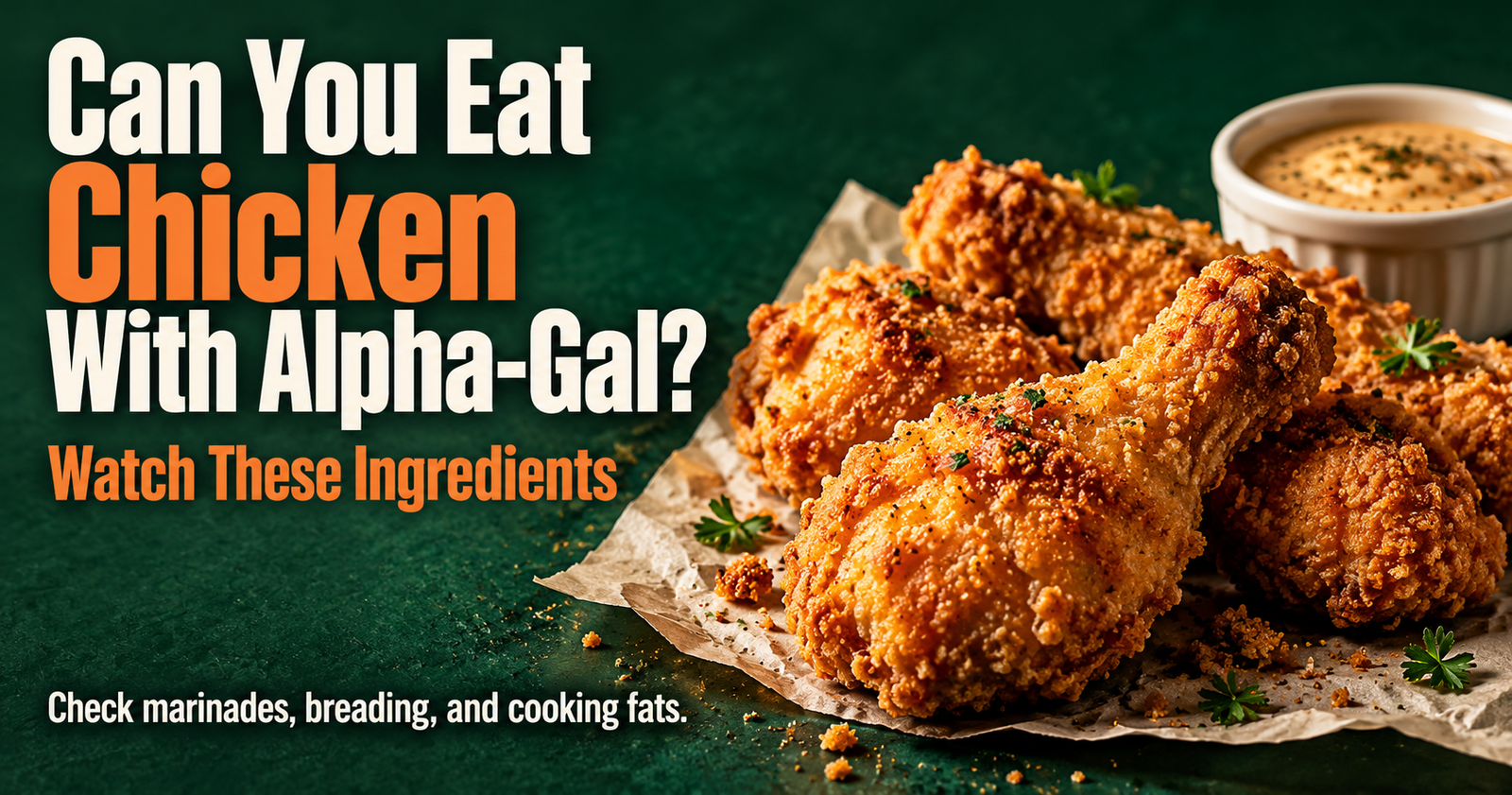
For example, depending on the product, there could be dairy, mammalian fat, broth, or another ingredient that matters to an individual’s AGS plan. A prepared chicken meal shows how those less obvious ingredients can change the food questions you need to ask; see hidden ingredients in chicken meals.
So gelatin-free answers one question.
It doesn’t answer every Alpha-gal question.
Likewise, a product being meat-free doesn’t necessarily tell me whether it contains dairy or gelatin.
That’s why our broader guide to what you can eat with Alpha-gal syndrome is where I’d start before getting lost in individual ingredients.
Gelatin Is Exactly Why Label Reading Matters
Gelatin taught me a useful way to think about Alpha-gal food shopping.
Don’t judge a food by what it looks like.
A gummy bear doesn’t look like a pig.
A marshmallow doesn’t look like a cow.
A vitamin capsule certainly doesn’t look like either one.
But ingredients have sources.
Once you start asking where those ingredients came from, food labels become much more useful.
You don’t need to memorize every chemical name on the package.
Start with the ingredients that have a clear reason to matter.
For gelatin, that means asking:
Is gelatin actually in this product?
If it is, where did it come from?
Does mammalian gelatin matter for my individual AGS?
Those three questions get me much farther than trying to label every gummy, marshmallow, dessert, capsule, and supplement as universally safe or unsafe.
The Replacement Usually Isn’t as Hard as Finding the Problem
The nice thing about gelatin is that there are alternatives.
Pectin gummies exist.
Gelatin-free marshmallows exist.
Agar-agar exists.
Vegetable capsules exist.
Fish gelatin exists in certain applications.
Plenty of desserts don’t require gelatin at all.
So if mammalian gelatin is something I need to avoid, I’m not interested in spending the rest of my life mourning gummy bears.
I want the replacement.
Find it.
Save the brand.
Move on.
That’s how I want Alpha-gal to fit into everyday life.
Not pretending the restrictions aren’t real, but also not giving every ingredient more power over my day than it deserves.
The Question I Ask Now Isn’t Just “Does This Have Gelatin?”
It’s:
“What kind?”
That tiny change makes the whole subject easier.
Gelatin isn’t one mysterious substance with one source.
Porcine gelatin comes from pigs.
Bovine gelatin comes from cattle.
Fish gelatin comes from fish.
Plant-based alternatives such as pectin and agar aren’t traditional gelatin at all.
If mammalian gelatin is part of your personal Alpha-gal avoidance plan, knowing those differences can turn a confusing ingredient into something you can actually shop around.
And that’s ultimately what I want from every food guide on After The Tick.
Not another enormous list that scares you into thinking you can’t eat anything.
I want enough information to stand in the grocery aisle, turn over the package, and know what question to ask next.
Hannah Brooks writes about the everyday reality of managing food with Alpha-gal syndrome for After The Tick, from decoding ingredient labels and finding workable substitutes to making grocery shopping feel normal again.