

Breakfast is one of those meals that can feel surprisingly complicated when you’re trying to figure out what works with Alpha-gal syndrome.
Bacon is pork. Sausage is often pork. Biscuits and gravy can contain pork sausage, milk, and animal fat.
But what about eggs?
Yes, eggs themselves do not contain alpha-gal. Chickens are birds, not mammals, and the CDC specifically lists eggs among foods that don’t naturally contain the alpha-gal molecule.
That’s good news because eggs are affordable, easy to prepare, and useful in everything from breakfast sandwiches to baked goods.
The part I pay attention to isn’t the egg itself.
It’s what gets added to it.
Why Eggs Don’t Contain Alpha-Gal
Alpha-gal is a sugar molecule found in most non-primate mammals.
Cows have it.
Pigs have it.
Deer have it.
Chickens don’t naturally produce alpha-gal.
Neither do their eggs.
That’s why eggs are different from beef, pork, lamb, and venison when it comes to Alpha-gal syndrome.
Of course, someone can have a separate egg allergy. That’s a completely different medical issue.
But having Alpha-gal syndrome doesn’t automatically mean you need to avoid eggs.
And considering how many everyday recipes use eggs, that’s something worth understanding.
Scrambled Eggs Are Where I Check the Cooking Fat
Scrambled eggs are about as basic as breakfast gets.
Crack a couple of eggs.
Whisk them.
Pour them into a skillet.
Cook.
But here’s where preparation matters.
What went into the skillet before the eggs?
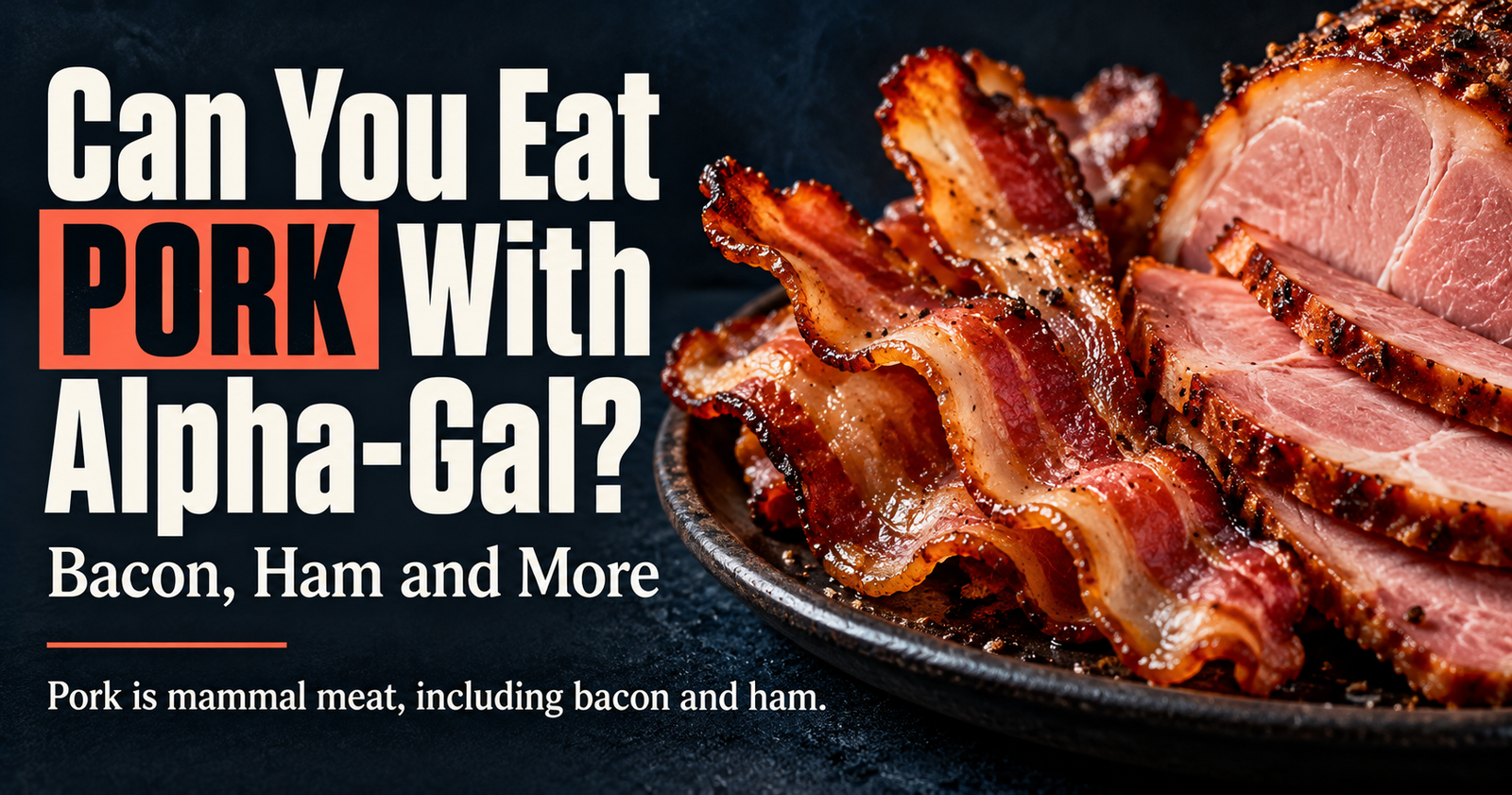
Eggs cooked in bacon grease
Bacon grease comes from pigs.
And pork is a mammalian product.

If someone needs to avoid pork fat because of Alpha-gal, cooking eggs in bacon grease introduces an ingredient that matters. The same principle applies beyond breakfast: ingredients that can change a meal even when the main food seems suitable.
That’s why I don’t automatically assume scrambled eggs are appropriate simply because the main ingredient is eggs.
Eggs cooked in vegetable oil
Olive oil, canola oil, and other plant-derived cooking oils don’t naturally contain alpha-gal.
That gives me a straightforward way to prepare eggs without adding mammalian fat.
What about butter?
Butter comes from milk.
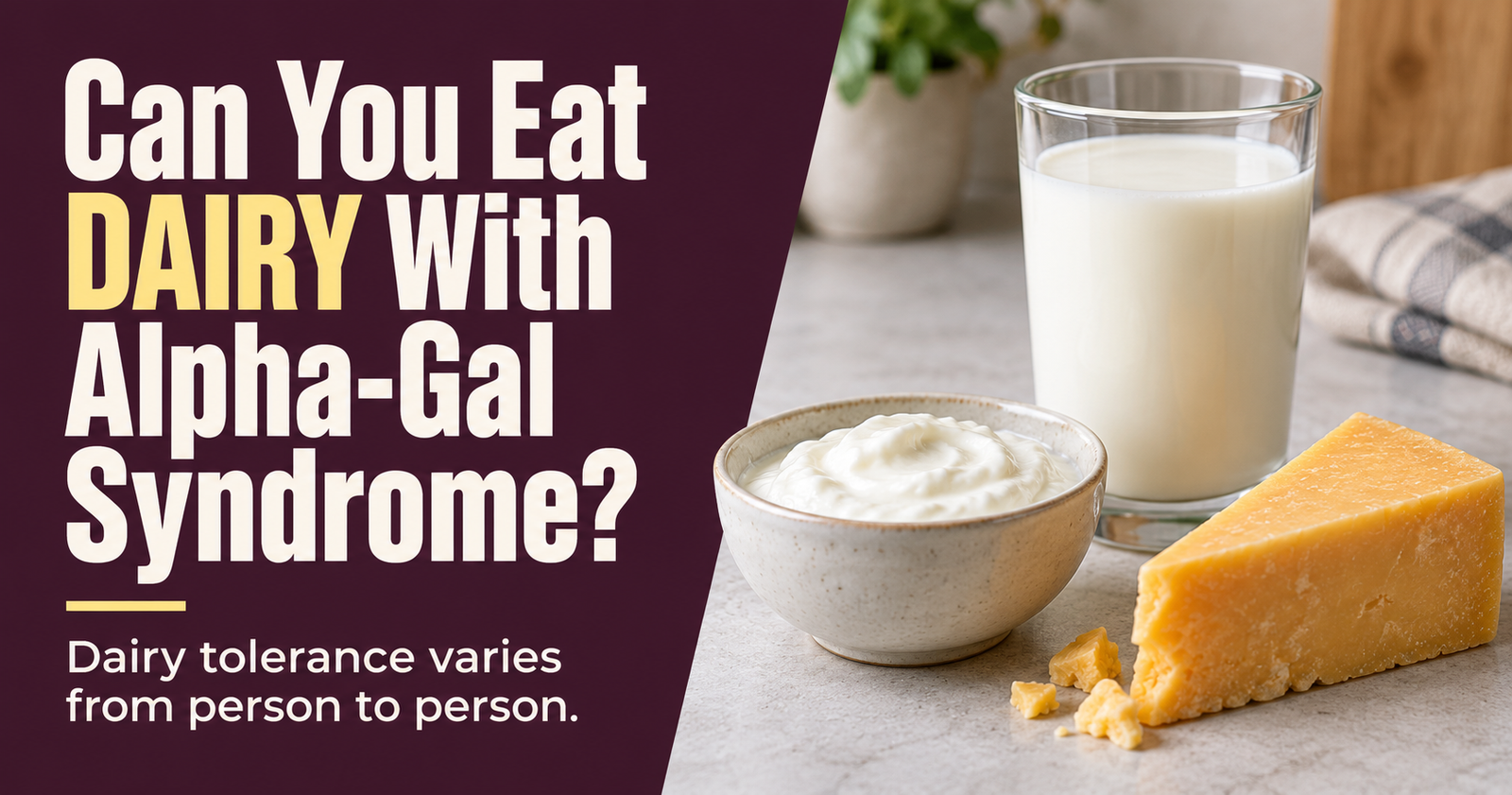
Many people with Alpha-gal tolerate dairy, while others need to avoid it. The differences in dairy tolerance are explained in more detail for people deciding what belongs in their breakfast routine.
So eggs cooked in butter aren’t automatically off-limits for everyone with AGS.
It depends on individual dairy tolerance and medical guidance.
We covered that distinction in our guide to eating dairy with Alpha-gal syndrome.

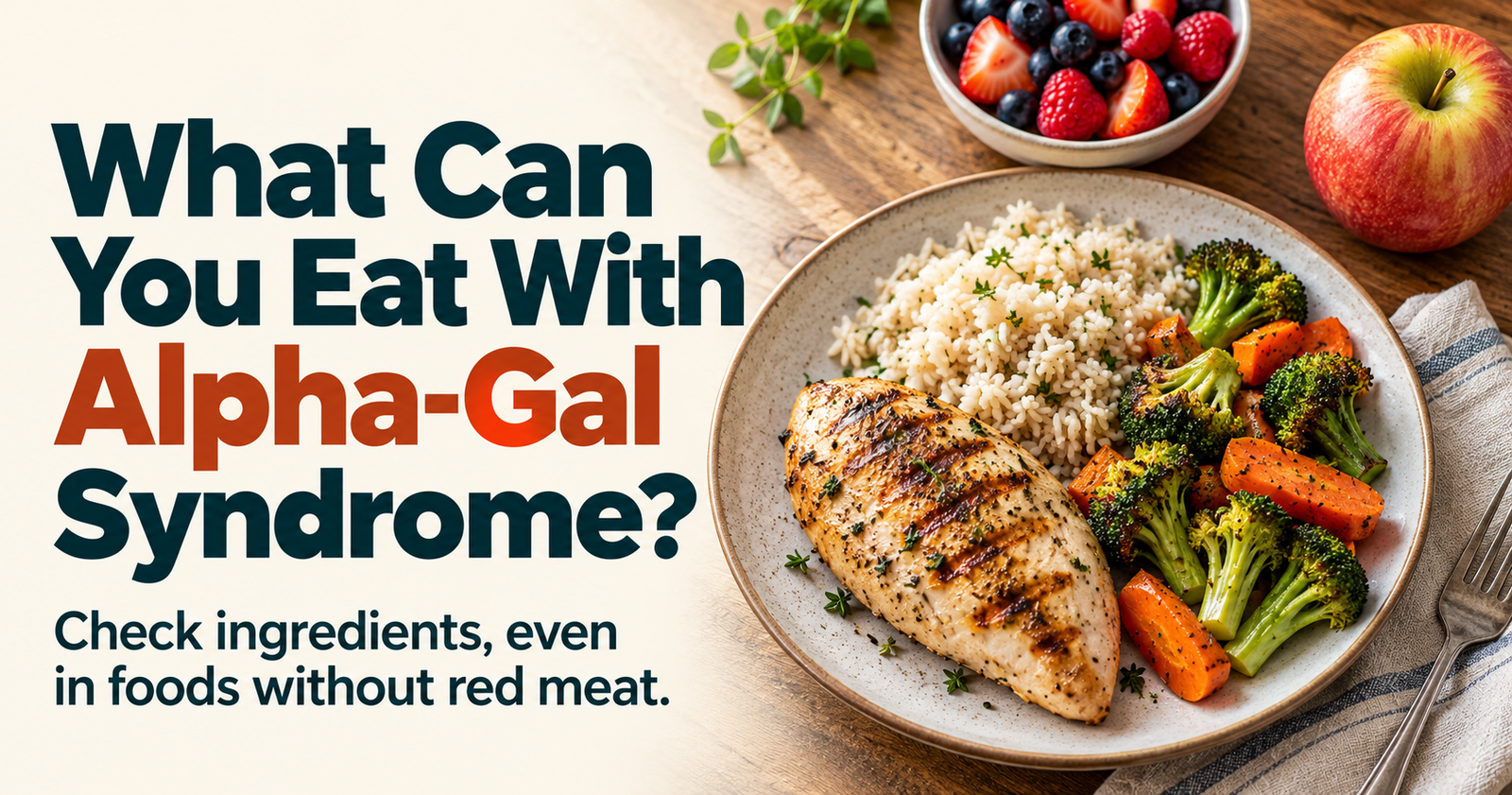
Fried Eggs Can Be Just as Simple
Fried eggs are another option.
The same basic rules apply.
I pay attention to the cooking fat, seasonings, and anything served alongside them.
Eggs fried in a suitable plant oil are different from eggs fried in leftover bacon grease.
And this is where cooking at home has an advantage.
I know what’s in the skillet.
I don’t have to guess.
Hard-Boiled Eggs Are One of the Simplest Options
If there’s one egg preparation that removes most of the ingredient questions, it’s hard-boiling.
Eggs.
Water.
That’s it.
There’s no need for bacon grease, butter, milk, or broth.
Hard-boiled eggs are also convenient because they can be prepared ahead of time.
They’re useful for breakfast, lunches, salads, and snacks.
I like the simplicity of foods where I don’t have to research ten different ingredients before eating.
Hard-boiled eggs fit that description.


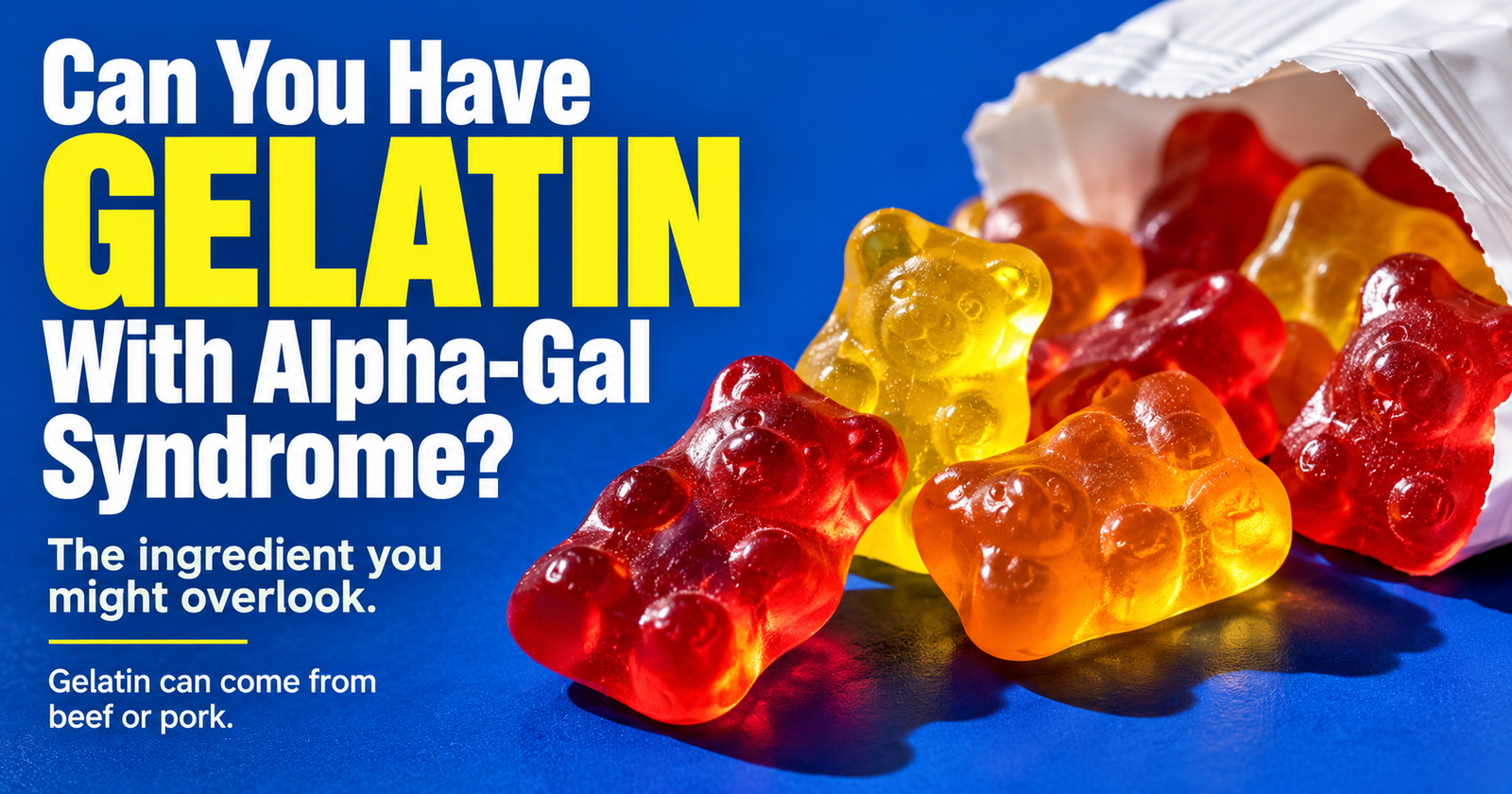
Omelets Can Get Complicated Depending on the Filling
An omelet is another example of how the main ingredient can be straightforward while the finished meal needs more attention.
Eggs themselves don’t contain alpha-gal.
But an omelet might include:
- Ham
- Bacon
- Pork sausage
- Cheese
- Butter
- Vegetables
- Chicken or turkey
Those ingredients aren’t all equivalent.
Ham, bacon, and traditional pork sausage introduce mammalian meat.
Cheese and butter introduce dairy, which some people with AGS tolerate.
Vegetables don’t naturally contain alpha-gal.
Chicken and turkey are poultry.
So instead of treating every omelet as questionable, I look at what’s actually inside it.
My favorite approach to building a simple omelet
A practical combination is eggs, peppers, onions, mushrooms, and spinach, prepared with an appropriate cooking oil.
If dairy is tolerated, cheese may also be an option.
If it isn’t, the omelet doesn’t need cheese to be filling.
That’s one of the nice things about eggs.
They work with plenty of ingredients that aren’t mammalian-derived.
Breakfast Restaurants Are Where I Ask More Questions
At home, I know what goes into my eggs.
At a restaurant, I don’t.
A diner may cook eggs on a griddle that also handles bacon, sausage, and hamburgers.
Butter or another cooking fat may be used.
Some restaurants add milk or other ingredients to scrambled egg mixtures.
That’s why I prefer asking a specific question instead of simply saying I have Alpha-gal.
What I ask about restaurant eggs
“Are the eggs cooked in butter, bacon grease, or vegetable oil?”
If cross-contact is part of my medical avoidance plan, I also ask whether the kitchen can use a clean pan and separate utensils.
Those questions are more useful than expecting every restaurant employee to understand Alpha-gal syndrome.
And I recognize that people with AGS can have different sensitivities, so not everyone needs identical cooking precautions.
Can You Eat Egg Salad With Alpha-Gal?
Egg salad can be a useful lunch option.
A basic recipe often contains hard-boiled eggs, mayonnaise, mustard, and seasonings.
The eggs themselves aren’t an Alpha-gal concern.
But I still check the other ingredients.
Most conventional mayonnaise is made with eggs, oil, and acidic ingredients such as vinegar or lemon juice.
That doesn’t mean every mayonnaise product has an identical recipe.
I read the label.
And if I’m buying prepared egg salad from a deli, I want to know what was added.
Bacon pieces, dairy ingredients, or other additions can change the situation.
What About Deviled Eggs?
Deviled eggs are another food that can be fairly straightforward.
A basic recipe uses hard-boiled eggs, mayonnaise, mustard, and seasonings.
But some recipes add bacon.
Others use different fillings or toppings.
That’s why I don’t assume every tray of deviled eggs at a family gathering was prepared the same way.
If I didn’t make them, I ask what’s in them.
A simple question can save a lot of guessing.
Eggs in Bread, Cakes, and Other Baked Goods
This is where the egg question becomes slightly different.
If someone has Alpha-gal syndrome, the egg in a cake isn’t naturally the problem.
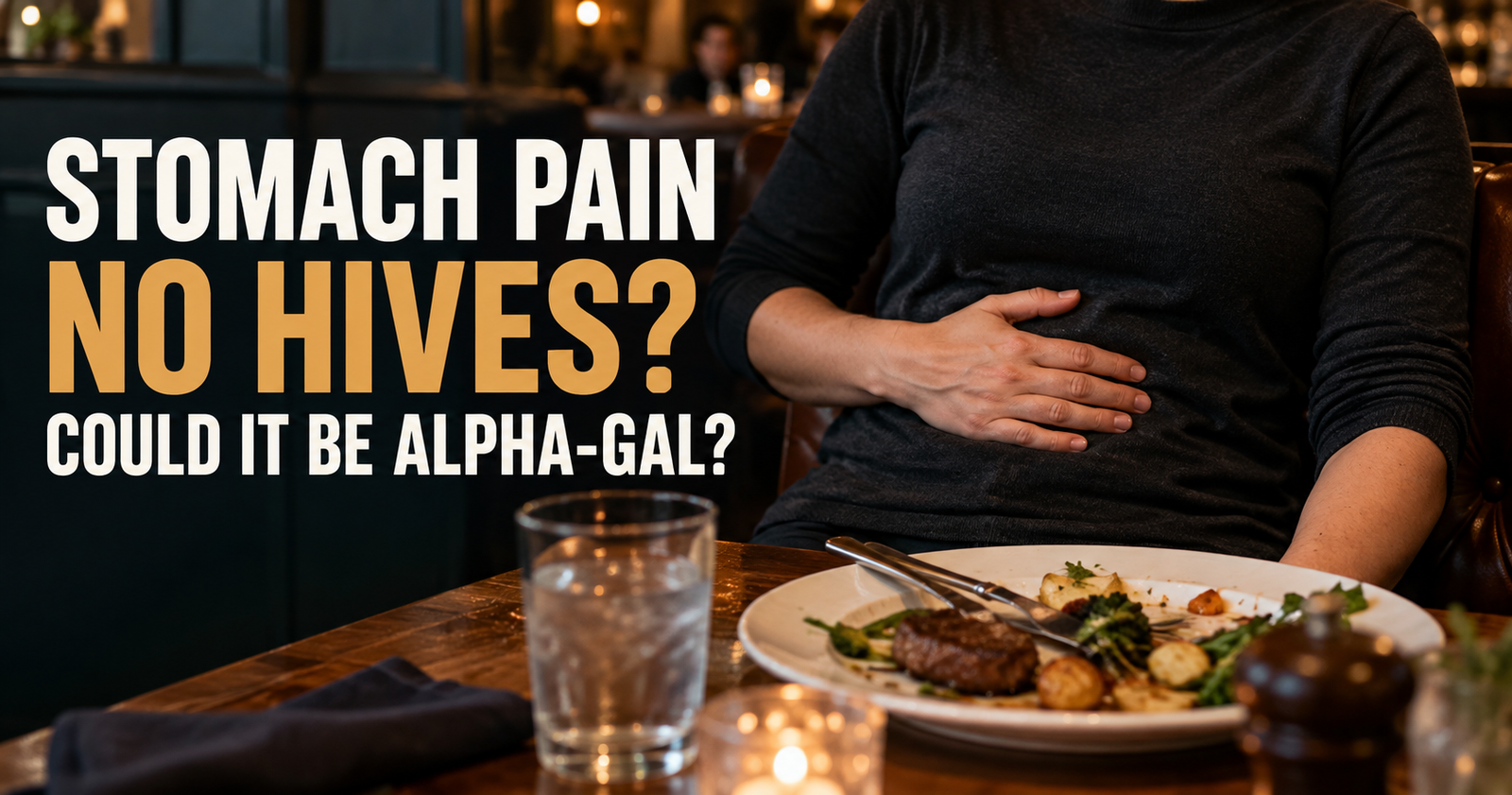
But the cake may also contain milk, butter, gelatin, or another mammalian-derived ingredient.
The same applies to:
Pancakes.
Waffles.
Biscuits.
Muffins.
Cookies.
French toast.
Breakfast casseroles.
The presence of eggs doesn’t automatically make a baked food unsuitable.
And it doesn’t automatically make the entire recipe suitable either.
I check the complete ingredients.

That’s the same approach covered in our practical food-label reading guide.
Pancakes Are a Good Example
Pancakes commonly contain eggs.
They may also contain milk and butter.
Some mixes require adding those ingredients separately.
Others already contain dried milk ingredients.
And then there’s what goes on top.
Butter.
Syrup.
Whipped cream.
Fruit.
Chocolate chips.
The egg isn’t what makes pancakes complicated.
It’s the entire recipe and toppings.
For someone who tolerates dairy, traditional pancakes may fit their individual plan.
For someone who avoids dairy, there are recipes using plant-based alternatives.
That’s why I don’t believe every person with Alpha-gal needs the same breakfast menu.
Can You Eat Eggs With Turkey Bacon?
Turkey is poultry.
That means turkey meat doesn’t naturally contain alpha-gal.
Turkey bacon can therefore be an alternative to traditional pork bacon.
But I still read the package because processed foods may contain additional ingredients.
I also pay attention to how it’s prepared.
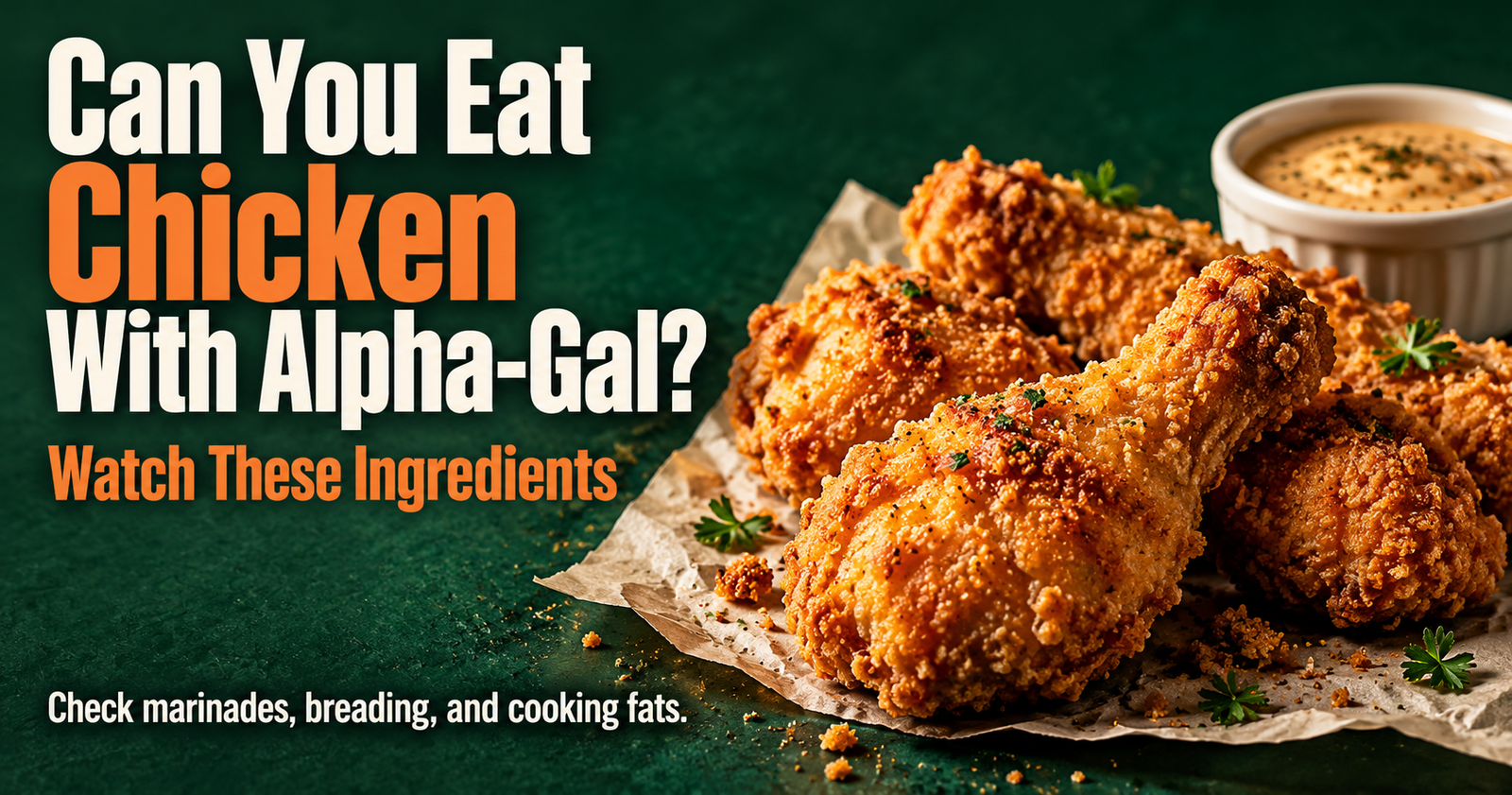
Turkey bacon cooked in pork bacon grease introduces a different ingredient than turkey bacon cooked separately. The same preparation question applies when checking Turkey bacon cooked in pork bacon grease and other poultry dishes.
We’ve already covered the mammalian side of breakfast in our pork, bacon, and ham guide.
For me, the useful distinction is that the word bacon doesn’t tell the entire story.
The animal source and ingredients matter.
What About Breakfast Sausage?
Traditional breakfast sausage is commonly made from pork.
But chicken and turkey sausage alternatives are available.
I check the meat source, added fats, seasonings, and casing.
Some poultry sausages use mammalian casings.
Others don’t.
Once I find a product with ingredients that fit the appropriate avoidance plan, I save the exact brand and variety.
That makes breakfast easier the next time.
Egg Substitutes Aren’t Usually Necessary Because of Alpha-Gal
This is something I think gets overlooked.
A person with Alpha-gal syndrome doesn’t automatically need to replace eggs with flaxseed, chia seeds, or commercial egg substitutes.
Eggs don’t naturally contain alpha-gal.
Those alternatives may be useful for someone with a separate egg allergy, someone following a vegan diet, or someone who simply prefers them.
But Alpha-gal alone isn’t a reason to assume ordinary eggs need replacing.
I wouldn’t make my diet more restrictive than necessary.
What If Eggs Make You Feel Sick?
I wouldn’t immediately assume Alpha-gal is responsible.
Eggs can cause allergic reactions in people with an egg allergy.
They can also be part of meals containing other ingredients that cause digestive symptoms.
And stomach problems have plenty of causes unrelated to food allergies.
If I noticed repeated symptoms after eating eggs, I’d write down the entire meal.
Were the eggs cooked in butter?
Was bacon involved?
Was there sausage?
Did I eat something else?
When did symptoms begin?
That information is more useful than automatically blaming the egg.
If the symptoms are recurring, I’d bring that history to a healthcare professional.
And I wouldn’t deliberately repeat a suspected allergic exposure to test myself.
My Simplest Alpha-Gal Breakfast Ideas
I don’t think breakfast needs to become an elaborate project.
Some straightforward meal combinations include:
- Hard-boiled eggs with fruit and toast made from suitable ingredients.
- Scrambled eggs with potatoes cooked in plant oil.
- Vegetable omelets with ingredients that fit the individual’s dairy restrictions.
- Fried eggs with oatmeal and fruit.
- Egg salad sandwiches made with checked ingredients.
- Breakfast bowls with eggs, rice, vegetables, and an appropriate protein.
These aren’t complicated specialty recipes.
They’re ordinary meals.
That’s what I like about them.
Once the ingredients are sorted out, breakfast doesn’t have to revolve around everything a person can no longer eat.
Eggs Are One Food I Wouldn’t Overcomplicate
Alpha-gal syndrome can make grocery shopping and cooking frustrating enough without eliminating foods that don’t naturally contain the allergen.
Eggs are one of those foods worth understanding correctly.
Eggs themselves don’t contain alpha-gal.
That doesn’t mean every egg dish is automatically appropriate.
Bacon grease, pork sausage, mammalian broth, and certain other ingredients can change the meal.
Dairy matters for some people and not others.
Restaurant preparation may introduce additional questions.
But the egg itself isn’t a mammalian food.
And having familiar foods like eggs available can make everyday meals considerably easier.
That’s the approach I want to keep taking with food.
Understand the actual ingredients.
Follow individual medical guidance.
Don’t add unnecessary restrictions.
And find ways to make breakfast, lunch, and dinner feel like ordinary meals again.
Hannah Brooks writes practical guides about everyday food decisions, grocery shopping, and cooking with Alpha-gal syndrome for After The Tick.