
Calling Alpha-gal syndrome a “red meat allergy” isn’t exactly wrong.
It’s just incomplete.
Beef, pork, lamb, venison, and other mammalian meats are some of the biggest concerns with Alpha-gal syndrome. That’s where the red-meat-allergy nickname came from, and it’s still commonly used. For the broader condition, including symptoms and hidden mammal-derived ingredients, see this practical guide to Alpha-gal after a tick bite.
But Alpha-gal isn’t really an allergy to the color red, and it isn’t necessarily limited to a steak, hamburger, or pork chop.
The allergy is to alpha-gal, a sugar molecule found in most mammals and products made from them.
Once I understood that difference, a lot of the strange rules surrounding Alpha-gal made considerably more sense.
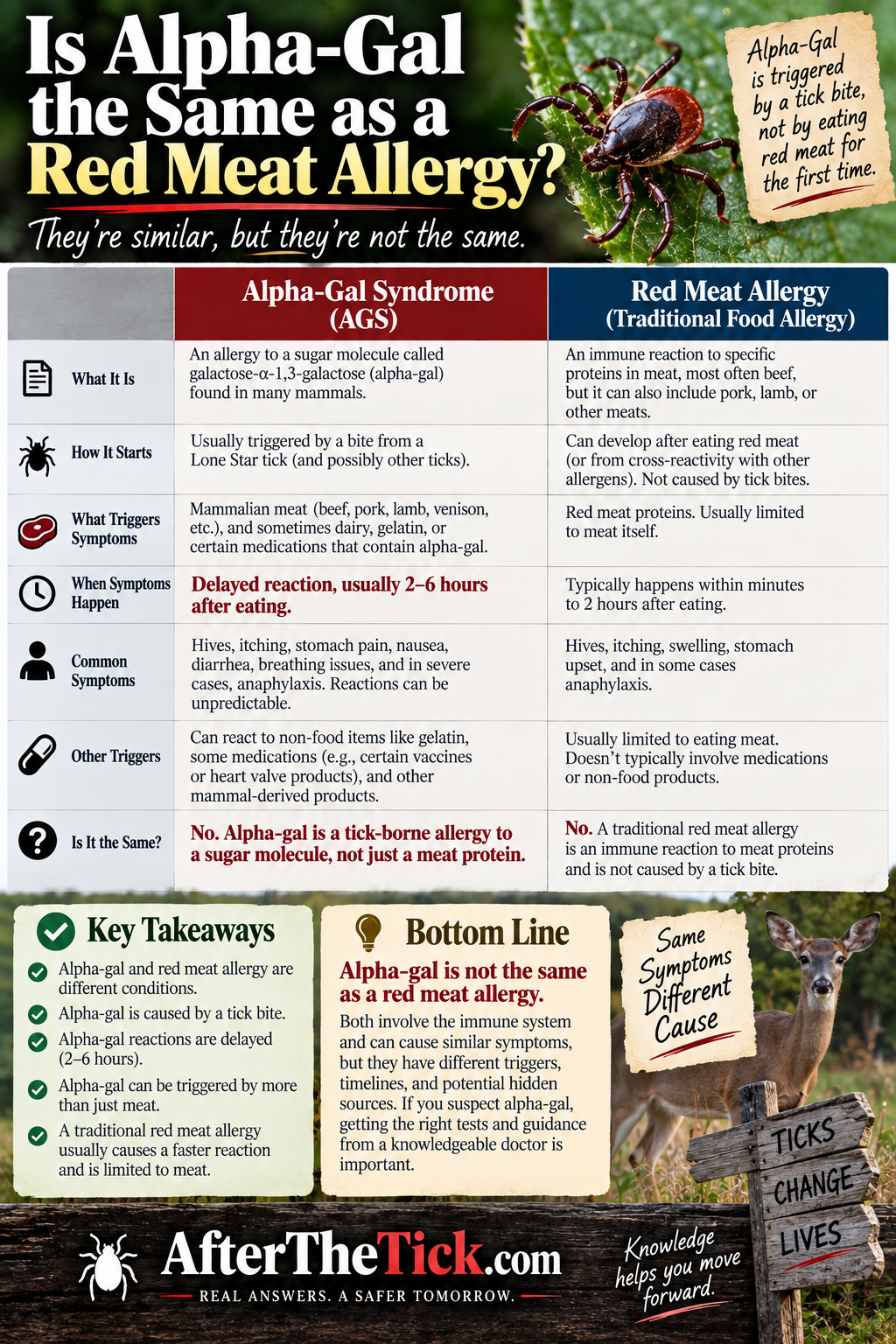
Alpha-Gal Syndrome Is Often Called a Red Meat Allergy
You’ll hear several names used for this condition:
Alpha-gal syndrome
AGS
Red meat allergy
Mammalian meat allergy
Tick-bite meat allergy
In everyday conversation, those names may be referring to the same basic condition.
But Alpha-gal syndrome is the more useful name because it tells us what the immune system is actually reacting to.
The problem isn’t simply “meat.”
It’s alpha-gal.
And that distinction becomes important the minute you start asking questions such as:
Can I eat chicken?
What about milk?
Why does gelatin matter?
Can broth cause a problem?
What about medications?
Suddenly, “red meat allergy” doesn’t explain enough.
Alpha-Gal Isn’t an Allergy to Red-Colored Meat
This sounds obvious once somebody says it, but the phrase “red meat allergy” creates a surprisingly easy misconception.
The color isn’t what matters.
The animal does.
Alpha-gal is naturally found in most non-primate mammals.
That includes animals such as:
- Cows
- Pigs
- Sheep
- Deer
- Rabbits
Their meat can therefore contain alpha-gal.
That is why beef, pork, lamb, venison, rabbit, and other mammalian meats are major concerns for people diagnosed with AGS.
The important word isn’t red.
It’s mammal.

That’s Why Pork Counts Too
Pork is probably the easiest example of why “red meat allergy” can be confusing. Pork-related symptoms can also have digestive causes unrelated to Alpha-gal, as discussed in digestive causes of pork discomfort.
Some people think of pork as “the other white meat.”
From an Alpha-gal standpoint, that marketing distinction doesn’t matter.
A pig is a mammal.
Pork can contain alpha-gal.
So can bacon, ham, pork sausage, pork organs, and other foods derived from pigs.
The same logic applies to venison.
Whether a piece of meat looks dark red, pale pink, or anything in between isn’t what determines whether alpha-gal is present.
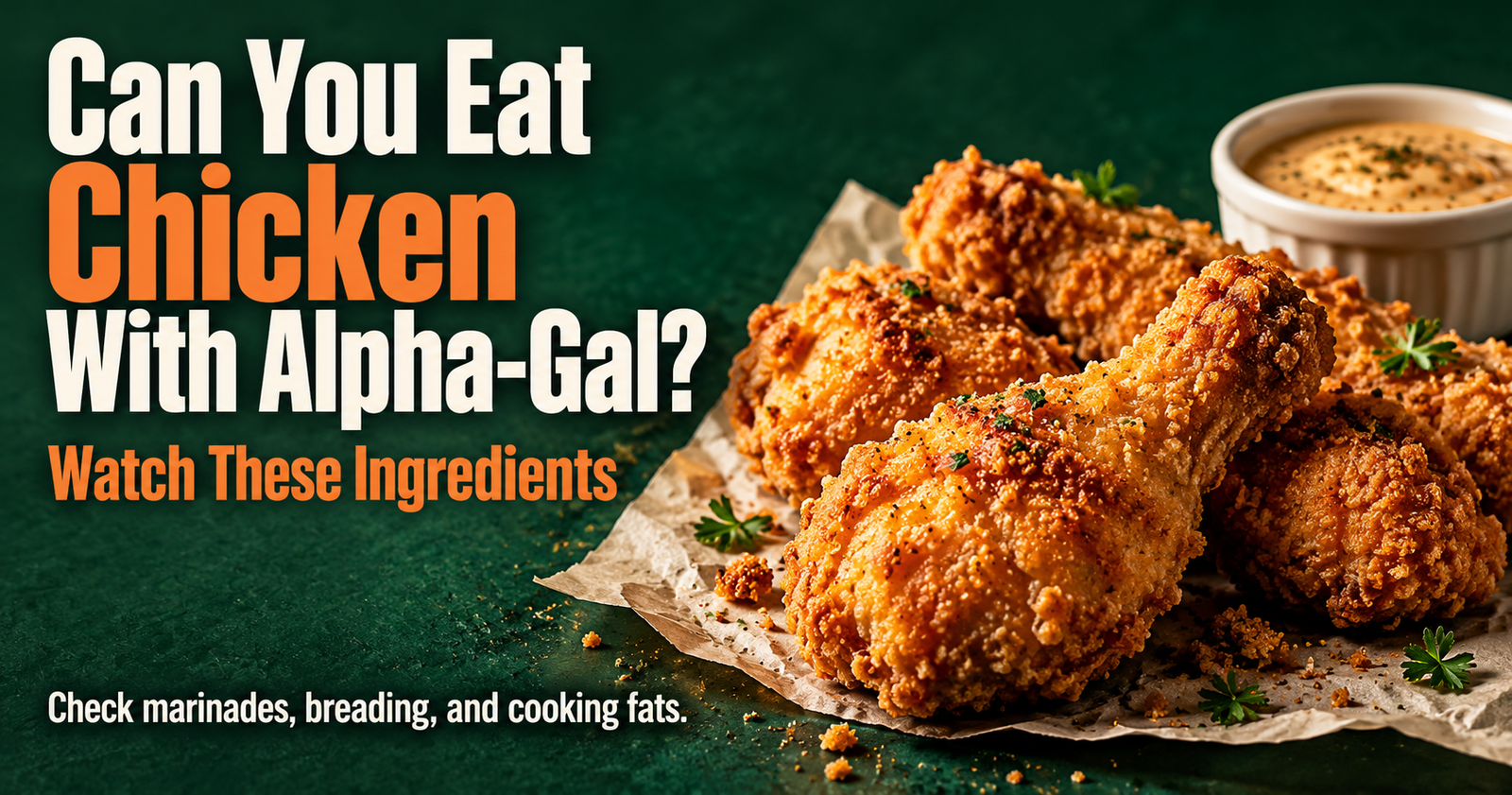
Chicken Is Different
Now the mammal rule becomes useful.
A chicken isn’t a mammal.
Neither is a turkey.
That means poultry does not naturally contain alpha-gal in the way mammalian meat does.
The same is true of fish and seafood.
So someone hearing “red meat allergy” might assume the rule is simply:
Red meat = bad
White meat = good
But that’s a sloppy way to remember it.
A better starting point is:
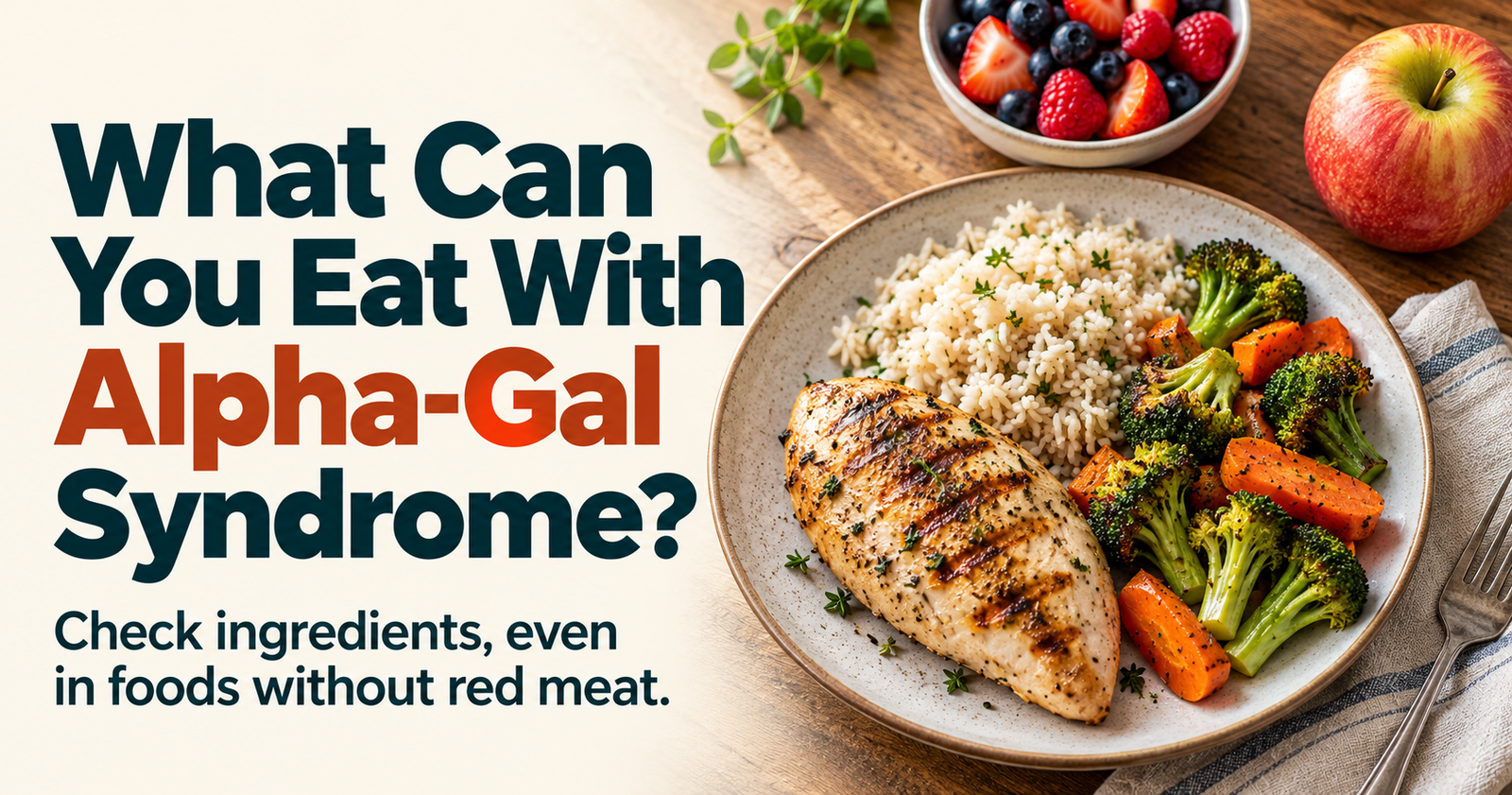
Mammalian meat can contain alpha-gal. Poultry and fish do not naturally contain alpha-gal.
That makes pork much easier to understand.
It also explains why chicken, turkey, duck, fish, and seafood belong in a different category.
Of course, prepared foods can introduce other ingredients, so the finished meal still matters. Chicken cooked in mammalian fat isn’t the same thing as plain chicken.
The Bigger Difference Is That Alpha-Gal Can Go Beyond Meat
This is where the “red meat allergy” label really starts falling apart.
Alpha-gal isn’t restricted to muscle meat.
Depending on the person, relevant sources can include mammalian products such as:
Dairy
Gelatin
Lard
Tallow
Suet
Broths and stocks made from mammals
Gravy containing mammalian ingredients
And there are certain medications and medical products that may contain mammal-derived ingredients too.
Not everybody with AGS reacts to all of those.
That’s important enough to repeat:

Having Alpha-gal syndrome does not automatically mean you react to every single thing that contains or may contain alpha-gal. That variability is part of the broader question of how Alpha-gal reactions may change over time.
Individual sensitivity varies considerably.
Can You Have Alpha-Gal and Still Eat Dairy?
Some people can.
This is a perfect example of why I wouldn’t hand somebody diagnosed with AGS a massive “never eat this again” list.
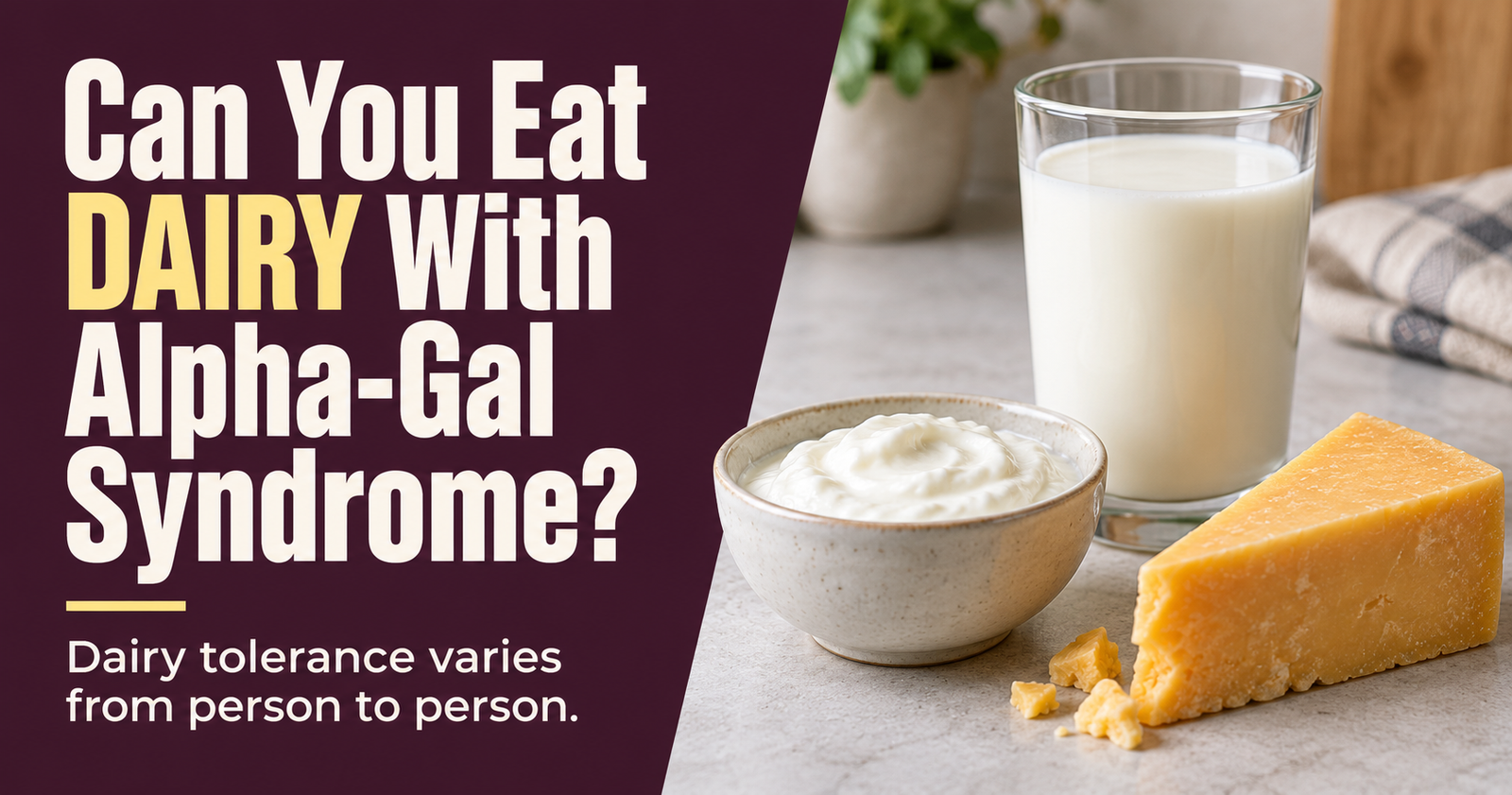
Milk and milk products may contain alpha-gal, but many people with AGS tolerate dairy. The question of whether dairy is safe with AGS depends on individual reactions and medical guidance.
Others don’t.
That means the correct question isn’t:
“Does dairy contain anything related to Alpha-gal?”
It can.
The more useful question is:
“Does my individual Alpha-gal syndrome require me to avoid dairy?”
That’s something to work through with your allergist or healthcare provider based on your reaction history and medical guidance.
We’re going to cover dairy separately because it deserves its own article rather than being buried inside a general list.
Gelatin Is Another Reason “Meat Allergy” Doesn’t Tell the Whole Story
Gelatin isn’t a steak.
It can still matter.
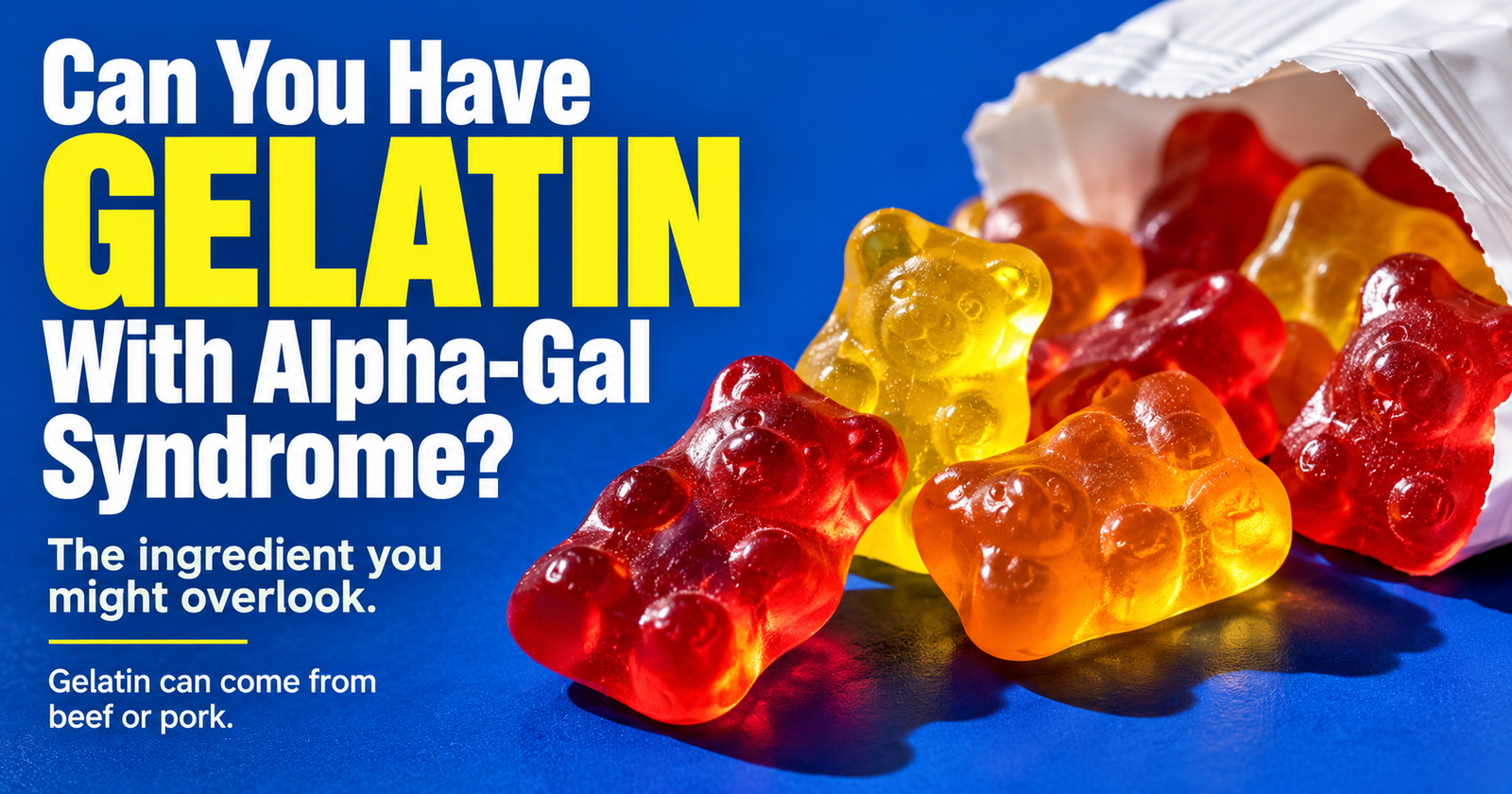
Gelatin can be made from mammalian tissues, including beef- or pork-derived sources. Some people with AGS may react to mammalian gelatin.
That creates situations that don’t make much sense if you’ve been told only:
“You’re allergic to red meat.”
Why would a gummy candy matter?
Why would a marshmallow deserve a label check?
Why would gelatin in a medication even come up?
Once you understand that the immune system is recognizing alpha-gal rather than a steak, those questions stop seeming so strange.
Again, that doesn’t mean every person with AGS needs to avoid every gelatin-containing product.
It means “red meat allergy” isn’t a complete description of the problem.
Alpha-Gal Is Also Unusual Because the Allergen Is a Sugar
Most of the food allergies people know are allergies to proteins.
Peanut allergy involves peanut proteins.
Egg allergy involves egg proteins.
Milk allergy generally involves proteins such as casein or whey.
Alpha-gal is different.
The target is galactose-alpha-1,3-galactose, a carbohydrate.
That’s where the name “Alpha-gal” comes from.
Your immune system can produce IgE antibodies that recognize this carbohydrate, creating the unusual allergy we call Alpha-gal syndrome.
That alone makes AGS different from the food-allergy pattern most of us grew up hearing about.

The Tick Connection Makes It Even Stranger
Then we add ticks.
In the United States, Alpha-gal syndrome is most strongly associated with bites from the lone star tick.
That means someone can spend decades eating hamburgers, pork chops, and venison without a problem.

Then, after tick exposure, their immune system can become sensitized to alpha-gal. The process behind that change is explained in how tick exposure causes sensitization.
Suddenly foods they’ve eaten their entire life may cause reactions.
That’s one of the things that makes AGS so unsettling when it first appears.
There may be no childhood food allergy.
No lifelong beef problem.
No obvious reason dinner suddenly became complicated.
The missing piece can be a tick.
I’ve gone deeper into that immune-system connection in our guide explaining what causes Alpha-gal syndrome after a tick bite.
Another Big Difference Is the Delay
Traditional food allergies have trained us to watch the minutes immediately after eating.
Alpha-gal can make you watch the clock for hours.
Food reactions commonly don’t begin until several hours after the meal.
Imagine eating a hamburger at 6 p.m.
Nothing happens at 6:15.
Nothing happens at 7.
You feel fine at 9.
Then you wake up around midnight itching, cramping, nauseated, or covered in hives.
That delay is one of the signature things that can make Alpha-gal difficult to recognize.
You aren’t necessarily looking back at dinner anymore.
You may blame something you ate later, detergent on the sheets, a stomach bug, or seemingly nothing at all.
That’s why the timing deserves its own guide, and why keeping track of both what you ate and when symptoms begancan be so useful.
Does Alpha-Gal Always Cause Hives or Anaphylaxis?
No.
This is another reason the phrase “meat allergy” can make people picture the wrong thing.
AGS can cause the classic allergic symptoms you’d expect:
Hives
Itching
Swelling
Trouble breathing
Dizziness
Anaphylaxis
But digestive symptoms can also be a major part of the condition.
Some people can even have gastrointestinal symptoms without the obvious skin symptoms they associate with an allergy.
That may mean:
Severe stomach pain
Cramping
Diarrhea
Nausea
Vomiting
Heartburn or indigestion
We’ve covered this separately in our guide to Alpha-gal stomach problems without hives because GI-only Alpha-gal can look surprisingly different from the allergy people expect.
So Is Every Red Meat Allergy Alpha-Gal?
No.
This distinction matters too.
Someone can have an allergic reaction associated with mammalian meat for reasons other than Alpha-gal syndrome.
There are allergies involving proteins found in meat, and there are other uncommon allergic conditions that can overlap with the foods involved in AGS.
One example is pork-cat syndrome, in which cross-reactivity involving cat and pork serum albumin can cause reactions to pork.
The timing can help distinguish different possibilities.
Alpha-gal food reactions are famous for their delay.
Some protein-mediated meat allergies can behave more like conventional food allergies and cause symptoms sooner after eating.

That is one reason I wouldn’t diagnose “Alpha-gal” simply because somebody says beef or pork makes them sick.
The actual history matters.
So does appropriate testing.
A Red Meat Intolerance Isn’t Automatically Alpha-Gal Either
Allergy and intolerance aren’t interchangeable words.
Someone can feel awful after a fatty hamburger without having an IgE-mediated allergy.
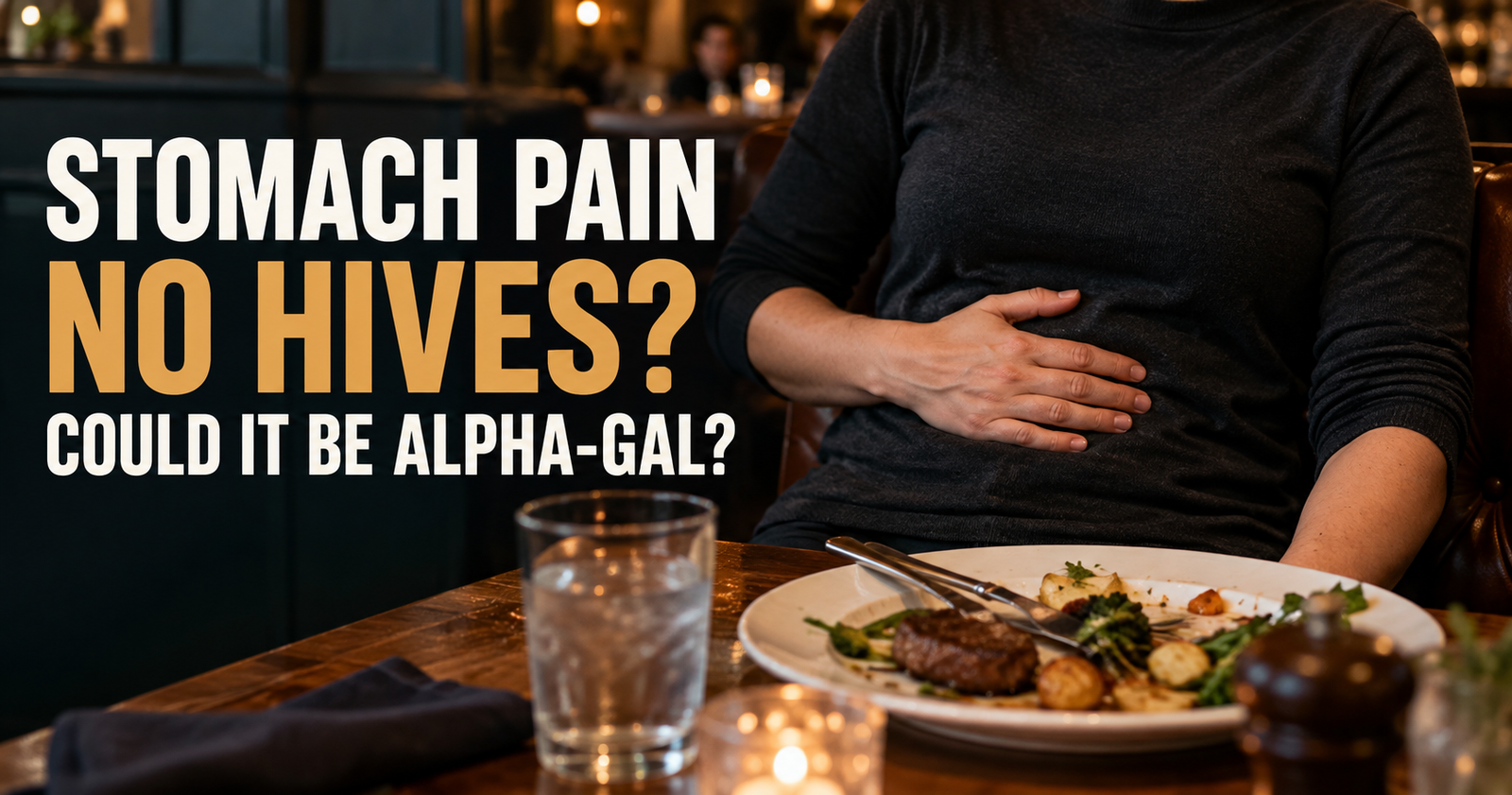
A person might have digestive symptoms related to fat, another ingredient in the meal, gallbladder disease, reflux, an unrelated food intolerance, or any number of gastrointestinal problems. When digestive symptoms follow a delayed pattern, digestive symptoms without typical allergy signs can help readers understand why Alpha-gal may still be part of the discussion.
Alpha-gal syndrome involves an immune response involving IgE antibodies against alpha-gal.
That’s different from simply saying:
“Red meat upsets my stomach.”
If you’re having repeated delayed symptoms after mammalian foods, especially with meaningful tick exposure, that’s worth discussing with a healthcare provider.
But the food alone doesn’t make the diagnosis.
How Would You Know Whether It’s Actually Alpha-Gal?
This is where the pieces we’ve been building across this cluster come together.
Doctors don’t diagnose AGS simply because beef seems to cause problems.
The evaluation generally includes:
- Your symptoms
- The foods or products involved
- How long after exposure symptoms begin
- Your tick and outdoor-exposure history
- An alpha-gal-specific IgE blood test
- Consideration of other possible explanations

The blood test is important, but even a positive result isn’t meant to stand completely on its own. For context on how to interpret the laboratory result alongside symptoms and exposure history, see interpreting a positive Alpha-gal result.
We’ve covered the full diagnostic process in our Alpha-gal diagnosis guide and, separately, what a positive Alpha-gal blood test actually means.
Those two distinctions are worth understanding before turning one meal or one laboratory number into a lifelong diagnosis.
Why Calling It “Mammalian Meat Allergy” Is Better, but Still Not Perfect
“Mammalian meat allergy” fixes one problem.
It gets rid of the misleading emphasis on meat color.
Beef, pork, lamb, venison, and rabbit make more sense when you group them by the animals they came from.
But even mammalian meat allergy doesn’t capture everything.
Dairy isn’t meat.
Gelatin isn’t meat.
A medication isn’t meat.
A mammal-derived medical product certainly isn’t meat.
Yet alpha-gal exposure can extend beyond food for some patients.
That’s why Alpha-gal syndrome is ultimately the most useful term.
It names the thing the immune system is reacting to rather than trying to describe every possible place that thing can show up.
Does Cooking Meat Get Rid of Alpha-Gal?
I wouldn’t rely on cooking to make mammalian meat safe for someone diagnosed with AGS.
Alpha-gal isn’t simply a surface contaminant that you can cook away.
Research examining different mammalian foods has continued to find alpha-gal-related allergenic activity across meats and processed mammalian products.
So this isn’t like ordering a steak well-done instead of medium and assuming the problem is solved.
If mammalian meat is a trigger for your AGS, cooking it more thoroughly isn’t a dependable workaround.
What About Meat Broth, Gravy, and Animal Fat?
These are exactly the kinds of foods that make “I don’t eat red meat” an incomplete safety strategy.
A bowl of soup might contain beef stock without containing visible chunks of beef.
Vegetables can be cooked with bacon grease.
French fries or other foods may be prepared with mammalian fat depending on the restaurant or product.
Gravy may contain meat drippings, broth, or mammalian fat.
Lard, tallow, and suet are mammalian fats.
For someone whose individual AGS requires avoiding those sources, the ingredient can matter even when there isn’t a pork chop sitting on the plate.
That’s where label reading and asking sensible restaurant questions become much more useful than judging food by appearance.
Does Everyone With Alpha-Gal Need the Same Avoidance List?
No, and I think this point can save people a lot of unnecessary fear.
AGS varies.
One person may primarily react to mammalian meat.
Another may need to be more cautious about dairy.
Another may have problems with mammalian gelatin.
Some people may need additional precautions involving medications or medical products.
So I would be wary of anybody handing every newly diagnosed person the longest possible Alpha-gal avoidance list and presenting every item on it as equally dangerous.
The goal is not to become afraid of everything derived from an animal.
The goal is to understand your diagnosis, your reaction history, and the avoidance plan your healthcare provider recommends for you.
A Better Way to Think About Alpha-Gal
If “red meat allergy” helps you quickly explain AGS to somebody who has never heard of it, that’s fine.
I might say:
“It’s the tick-associated allergy that can make people react to red meat and other mammalian products.”
That’s a pretty useful ten-second explanation.
But for actually living with the condition, I’d think about it differently.
Instead of asking:
“Is this red meat?”
Start asking:
“Is this from a mammal, and is it a source my Alpha-gal plan says I need to avoid?”
That one change makes a surprising number of confusing foods easier to understand.
Beef?
Mammal.
Pork?
Mammal.
Venison?
Mammal.
Chicken?
Not a mammal.
Turkey?
Not a mammal.
Fish?
Not a mammal.
Milk?
From a mammal, but individual AGS tolerance varies.
Gelatin?
Potentially mammal-derived, and relevant for some people.
Now the condition starts making a little more sense.
The Name Matters Because It Changes What You Look For
Calling Alpha-gal syndrome a red meat allergy is convenient.
But if that’s the only explanation somebody gets, they can walk away believing all they need to do is stop ordering steak.
That’s not necessarily enough.
Alpha-gal syndrome is an allergy to alpha-gal, not an allergy to the color or category we casually call red meat.
Mammalian meat is one of the most important sources, which is why the nickname stuck.
But dairy, gelatin, mammalian fats, broths, and certain other mammal-derived products can matter depending on the individual.
At the same time, don’t swing too far in the opposite direction and assume every possible mammalian ingredient is automatically dangerous to every person with AGS.
This condition is individual.
Understand what alpha-gal is.
Get the diagnosis right.
Work out your own avoidance plan with your healthcare provider.
And then build your everyday food decisions around that, rather than two misleading words on an internet search.
Bennett Rowe writes practical, research-backed guides about Alpha-gal, tick safety, and everyday outdoor life for After The Tick.